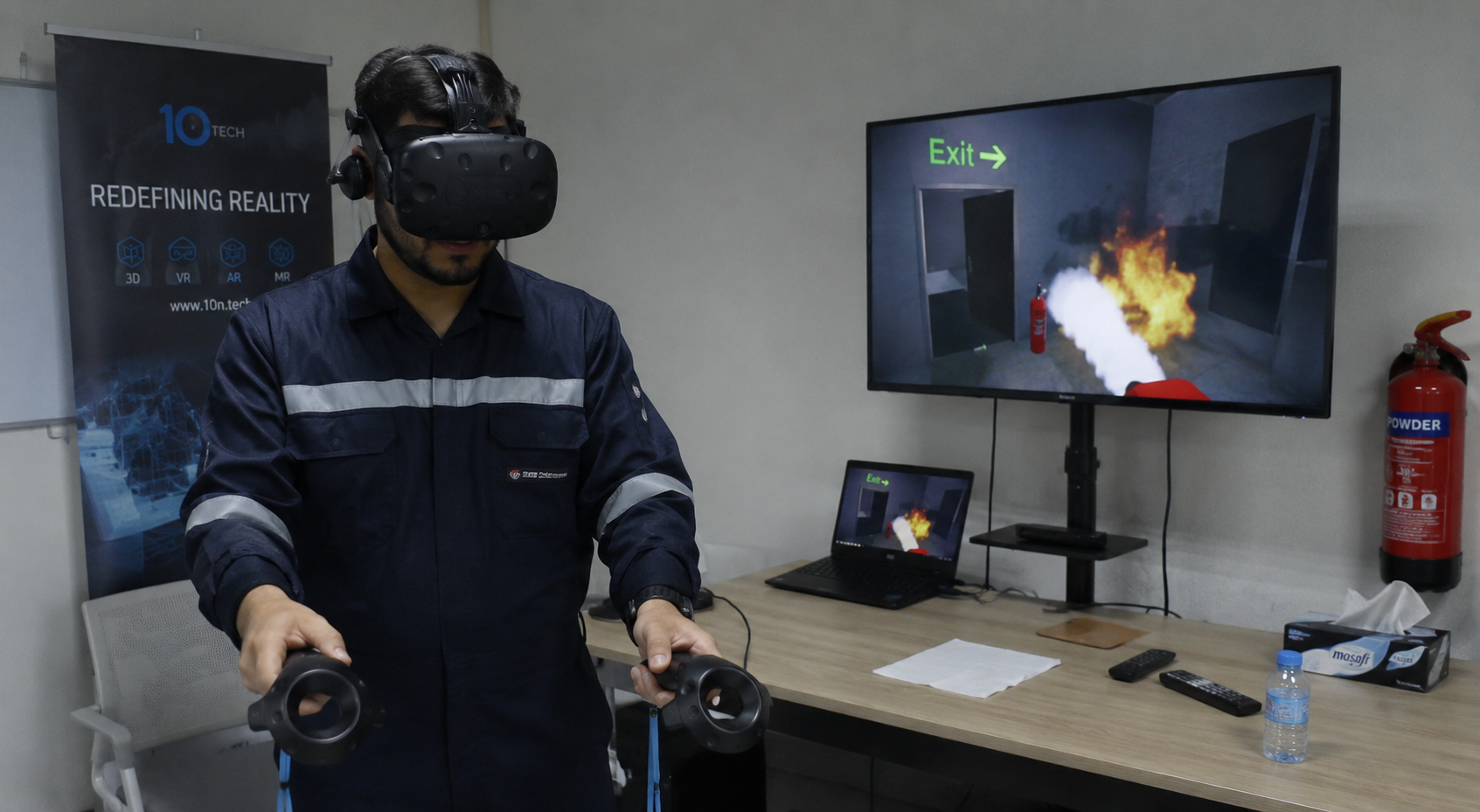
Most serious industrial incidents come down to human error, but the live plant is the worst place to practise for one. An industrial digital twin gives operators a working virtual replica of the plant and its control system, so they can rehearse normal operations and emergencies, prove their competence, and cut downtime – without touching production. This guide explains how it works, shows a Dubai Municipality example, and sets out how to start with a focused pilot.
Most serious process incidents are not caused by broken steel. They are caused by people, under pressure, making the wrong decision at the wrong moment.
The scale is easy to underestimate. The ASM Consortium, an industry group formed to study abnormal situations in process plants, estimates that these events cost the US petrochemical industry at least USD 10 billion a year, and that around 40% of them stem from human error. In highly automated plants, where hardware rarely fails on its own, the human share of failures runs higher still.
You cannot close that gap with a manual. And the obvious place to build the skill – the real facility – is also the worst place to practise. Training on live industrial equipment can interrupt operations, expose people and machinery to risk, and limit the scenarios instructors can recreate. A plant cannot be flooded, shut down, or pushed into a dangerous condition simply to test how a trainee responds.
That leaves industrial companies with a poor choice: provide realistic training and accept disruption, or protect production and rely on classroom learning that may not prepare people for real conditions.
An industrial digital twin removes the choice. It lets operators and maintenance teams train on a working virtual replica of the plant, its processes, equipment, and control systems – rehearsing normal operations and emergencies, and proving competence, without touching the live facility. It is an approach 10ⁿ Tech has already delivered at municipal scale, training more than 150 operators for Dubai Municipality’s Jebel Ali and Al Warsan plants (more on that below).
Why Traditional Industrial Training Has Limits
Most industrial training programmes combine classroom instruction, written procedures, observation, and supervised practice. Each method has value, but each also has limits.
Written materials explain what should happen, but they do not reproduce the pressure of a live incident.
Videos can show a procedure, but the employee stays a passive viewer.
Hands-on training is more practical, but it may require equipment to be taken out of service, and it can expose new employees to hazardous environments before they have built confidence.
The gap is widest exactly where it matters most: emergency preparation. Employees often understand a procedure in theory without ever having performed the sequence under realistic conditions. The table below shows why no single traditional method covers the whole problem – and why a digital twin does.
An industrial digital twin is the only option that lets teams rehearse the dangerous moments, on the real interface, as often as they need, with a record of how they performed.
What Is an Industrial Digital Twin?
A basic 3D model shows what a facility looks like. An industrial digital twin reproduces how it behaves.
The visual environment is only one layer. Underneath it sits a dynamic model of the real industrial process that calculates and reproduces variables such as flow, pressure, temperature, dosing, equipment status, and output. The twin can also connect to a replica of the facility’s real control system, including the same screens, mimic diagrams, alarms, and operator panels used during daily work.
When an operator changes a setting, shuts a valve, or responds incorrectly to a fault, the simulation reacts. Plant conditions update as they would in the real facility.
That is what turns it from a visualisation into a complete operator training simulator – one that supports safe learning, emergency rehearsal, and performance improvement. It is also why a generic simulator is not enough: operators who train on a generic system still have to relearn their own control room on day one. A digital twin of your plant and your control system removes that transfer gap.
10ⁿ Tech’s work for Dubai Municipality shows what this looks like in practice – laser-scanned plant environments, mathematical process models, a distributed control system (DCS) replica, VR maintenance modules, and training-assessment tools, combined in one operational platform.
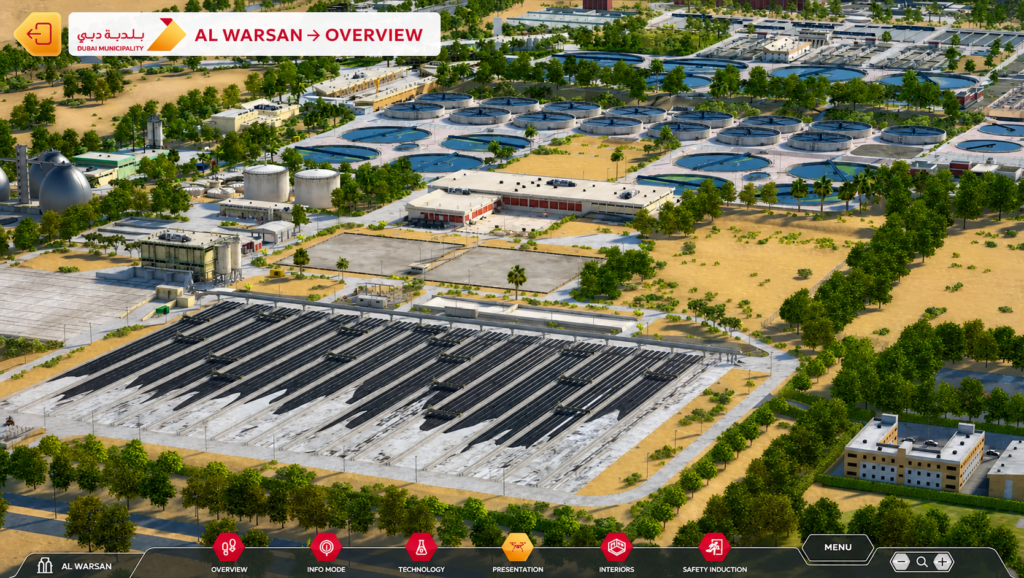
Al Warsan plant inside the Dubai Municipality industrial digital twin, showing how a real facility can be recreated as a training and simulation environment.
How an Industrial Digital Twin Supports Operator Training
An industrial digital twin gives employees access to a virtual version of the same system they are responsible for operating. A typical session follows five stages.
1. The instructor selects a scenario
The instructor can begin with normal operations, start-up, shutdown, equipment failure, or an emergency, tailored to the employee’s role and experience.
2. The trainee works through the real interface
The operator uses a replica of the plant’s DCS or other operational interface. This closes the gap between training and daily work – employees do not learn on a generic simulator and then face a different system in the control room.
3. The process reacts dynamically
The model recalculates conditions as the trainee makes decisions. A delayed action, wrong sequence, or incorrect setting produces real consequences inside the simulation, so the trainee sees how one decision ripples through the wider process.
4. Control-room and field teams work together
Industrial incidents rarely involve one person. A digital twin can place control-room operators, field technicians, and maintenance staff inside the same scenario, where they must communicate, coordinate, and follow the correct escalation.
5. Performance is recorded
The platform records completion time, correct and incorrect actions, missed steps, and the outcome. Supervisors get measurable results instead of relying on observation or a written test.
Rehearsing the Moments That Cause the Most Incidents
The strongest case for a digital twin is not routine operation. It is the moments that are rare, dangerous, expensive, or impossible to reproduce in real life – and, tellingly, the process-automation industry reports that the number-one reason plants adopt operator training simulators is to make start-ups, shutdowns, and transitions safer. Those transitions are where incidents cluster, because the plant is moving between stable states and the operator has the least margin for error.
A digital twin lets teams rehearse exactly those situations:
- Fire or flooding
- Electrical failure and blackouts
- Equipment malfunction and high-pressure incidents
- Incorrect chemical dosing
- Emergency shutdowns and start-up after a fault
- Hazardous maintenance procedures
- Coordination failures between field and control-room teams
Employees can repeat a scenario until their response becomes consistent. Instructors can then introduce variation – because a trainee who has memorised one sequence often struggles when conditions change.
The twin tests whether the operator understands the process, not just whether they remember the steps. Rehearsing emergencies safely, and repeatedly, is one of the clearest ways industrial digital twins improve safety without putting people or assets at risk.
Use VR for Maintenance and Safety Training
Control-room simulation covers only part of industrial work. Maintenance teams must also inspect, disassemble, repair, and reassemble complex equipment – and in many facilities, access to the real machine is limited because it stays in operation or can only be opened during planned maintenance.
A VR maintenance module inside an industrial digital twin creates an interactive replica of the equipment. Technicians can practise the procedure step by step, identify components, learn the correct sequence, and see the consequences of mistakes before touching the real asset.
10ⁿ Tech’s VR training systems support both routine procedures and emergency response, and the results stay available to supervisors for review. This applies to pumps and compressors, decanter centrifuges, dryers, electrical and high-voltage systems, production machinery, confined-space procedures, oil and gas equipment, and water-treatment assets.
The aim is not to replace every form of practical training. It is to make sure people reach the real environment already understanding the equipment, the sequence, and the risks.
Reduce Downtime Without Sacrificing Training Quality
Industrial training carries costs that are easy to miss. A machine taken offline for instruction affects output. An experienced operator assigned to supervise a trainee spends less time on normal duties. Physical training rigs need space, maintenance, and updates whenever the plant changes.
A digital twin changes the equation. Multiple employees can train without stopping production. Scenarios repeat without consuming materials or damaging equipment. The same platform supports onboarding, refresher training, assessment, and emergency preparation, and it can be updated when equipment, procedures, or layouts change.
The economics follow directly from the risk. Against the ASM Consortium’s figure – abnormal situations costing the industry billions a year – a single avoided shutdown or safety incident can be worth more than the entire training programme. For organisations running several sites, one standardised digital twin also delivers more consistent training across locations while reducing disruption.
Turn Training Into Measurable, Auditable Competence
Traditional training usually measures attendance and test completion. Neither proves that an employee can perform under pressure. An industrial digital twin can track:
- Time to complete a scenario
- Percentage of correct actions
- Missed or incorrect steps
- Number of instructor interventions
- Response time to alarms
- Compliance with the approved sequence
- Coordination between team members
- Improvement across repeated sessions
This gives managers a real view of competence – which procedures cause the most errors, which employees need support, and whether the programme is improving performance over time.
It also matters for compliance. Competence decays when a procedure is rarely used, and safety regimes such as OSHA’s Process Safety Management standard require documented operator training and periodic refreshers. A digital twin makes refresher training and evidence of competence routine rather than disruptive, and the same records support internal certification, audits, and regulatory reporting.
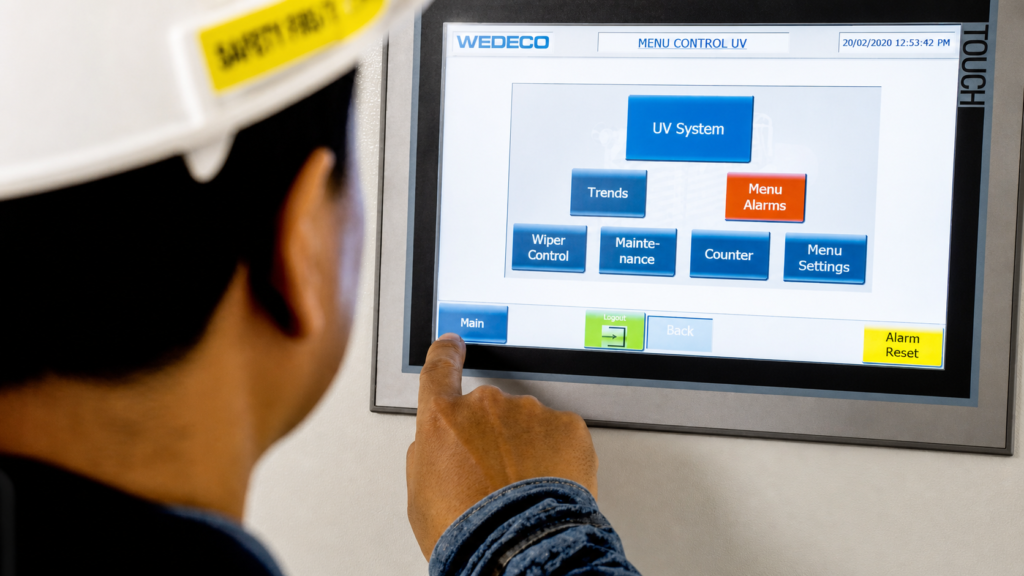
Turn Training Into Measurable, Auditable Competence
A Real Example: Dubai Municipality
10ⁿ Tech developed industrial digital twins and operator training systems for the Jebel Ali and Al Warsan sewage treatment plants operated by Dubai Municipality. Together, the two facilities process approximately 675,000 cubic metres of wastewater per day.
The build was deliberately operational, not decorative: aerial and ground laser scanning, detailed 3D environments, a mathematical model of the treatment process, a replica of the distributed control system, and VR maintenance training for equipment including decanters, effluent pumps, and solar dryers. Control-room operators and maintenance personnel could train on normal and emergency procedures without creating any risk for the live plants.
According to the official Dubai Municipality case study, more than 150 employees were trained, and the two plants reported around 30% lower operational and maintenance costs, roughly 30% less equipment downtime, and about 30 additional productive minutes per employee each day. The value came from combining training, safety improvement, and operational efficiency in one platform – the same three outcomes every industrial operator is trying to reach.
Which Industries Benefit From Industrial Digital Twins?
Any sector where mistakes are expensive, facilities are complex, or live training creates risk.
Water and Wastewater
Practise treatment processes, dosing, equipment failures, blackouts, flooding, and emergency response without affecting water quality or availability.
Oil, Gas, and Petrochemicals
Rehearse start-up, shutdown, process faults, leaks, fire response, and hazardous maintenance – the sector where the ASM cost figures are highest.
Power and Utilities
Train control-room teams on network faults, equipment failures, switching, and emergencies using a replica of the real operational interface.
Manufacturing
Learn production sequences, machine operation, troubleshooting, maintenance, and safety without interrupting a line – often as part of a wider industrial metaverse.
Ports and Logistics
Support equipment allocation, container movement, berth planning, traffic flow, and coordination between operational teams.
Heavy Industry and Mining
Practise equipment operation, hazardous tasks, and emergency procedures where physical training is expensive or unsafe.
What Is Needed to Build an Industrial Digital Twin?
A useful twin must reflect the real facility, not a generic version. Starting materials typically include plant drawings, CAD and 2D documentation, process descriptions, equipment specifications, control-system information, standard operating and emergency procedures, training and assessment requirements, access for laser scanning, and input from experienced operators and instructors.
The team then connects several disciplines – 3D reconstruction, industrial process modelling, system integration, VR development, instructional design, and assessment. This is why an industrial digital twin should be treated as an operational system, not a visualisation project.
How to Start Without Modelling the Entire Plant
You do not need to reproduce the full facility at once. A focused pilot can begin with one high-risk process, one critical asset, one emergency scenario, one maintenance procedure, one control-room workflow, or one employee group with a clear training gap.
That keeps the initial scope small and builds a measurable business case. Define success criteria up front – reduced training time, higher assessment scores, fewer procedural errors, faster emergency response, lower dependence on live equipment, fewer instructor hours, better operator confidence. Once the value is proven, the platform expands to more processes, equipment, and locations.
The Goal Is Safer, More Efficient Operations
Industrial companies do not need a digital twin because the term is fashionable. They need safer training, more capable operators, less downtime, and fewer avoidable mistakes – and when roughly 40% of costly abnormal situations trace back to human error, better-prepared people are not a soft benefit. They are the point.
An industrial digital twin connects directly to those outcomes. It gives employees a place to practise before the real decision matters, gives instructors a better way to test competence, and gives management measurable evidence that people are prepared – all without disrupting production.
The best place to start is your highest-risk process. Talk to 10ⁿ Tech about a focused industrial digital twin and operator-training pilot.
