Summary: For sea view apartments, the view column is the most argued line on the price list. A sales digital twin can settle it unit by unit by rendering each balcony at eye height and counting the sea. In one 116-unit project on the Larnaca coast, 19 units had a true sea view.
Of 116 apartments in one project on the Larnaca coast, 19 have a true sea view. Another 20 get a glimpse of it. The other 77 look at the city or into the courtyard.
We know because we counted. Not on a site visit and not from the floor plan: we stood a virtual buyer at every balcony railing, painted the sea one flat colour, and counted the pixels.
The question at the railing
Every coastal price list has a column called “view”, and it is the most argued column on it. A buyer standing in the show flat asks the agent the only question that matters for a third of the price: will I see the sea from mine, and how much of it?
The honest answer is usually “it depends”. It depends on the floor, the orientation, the building across the road and the tree in front of the second-floor balconies. Agents fill the gap with optimism. Buyers who paid for a sea view and got a sliver do not forget it.
How the sea view is computed
The project’s architect model is the starting point, placed inside a 3D twin of the city around it, which is measured from open data down to tree heights.
For each unit, a ray test against the architect’s model finds the edge of the balcony and steps over the building’s own walls. The camera then stands at eye height at the railing, which is the view the buyer will actually have, not a drone shot.
Then the trick. The sea is rendered in a single key colour that appears nowhere else in the scene. The camera turns through the view, and at each step the software counts how many pixels are that colour. The share of sea in the frame becomes a number, and the number becomes a label: sea view, sea glimpse, city or courtyard. The thresholds scale with the lens, so a wide view does not inflate the result.
For this project the count came out at 19 sea view, 20 sea glimpse, 43 city and 34 courtyard. Floor and orientation decide most of it, and the city in front decides the rest, which is why the city around the building has to be measured too.
What a developer does with it
The obvious use is pricing. A view premium set unit by unit, on a measured share of sea, is easier to defend than a premium set floor by floor on instinct. It also stops the awkward case where a cheaper unit on a higher floor has the better view.
The less obvious use is in the sales conversation. In the sales twin, each unit card carries its view label, and the buyer can stand on the balcony and turn around. The argument about the view ends before it starts, because the buyer has seen it. Units can be filtered by view, shortlisted and compared side by side, and the enquiry goes straight into the developer’s CRM.
The third use is honesty with yourself. If only 19 of 116 units really face the sea, the marketing that sells “sea view living” is promising something 97 buyers will not get.
What did not work
Two things we built and removed.
A setting that switched resolution on the fly doubled the frame rate on paper. To a person it looked like constant flicker, and once it froze the map. Numbers alone do not approve a visual change; the owner’s eye on an ordinary browser tab does.
An idle tour that roamed the city when nobody touched the screen annoyed people more than it attracted them. It is off by default now.
What to check before you commission a sales twin
- Ask whether the view from each unit is computed or drawn. A rendered hero shot from one balcony says nothing about the other 115.
- Ask what is in the city around the building. A view is only as true as the trees and buildings in front of it.
- Ask to stand on a mid-floor balcony on the less favoured side. If the twin is honest there, it is honest everywhere.
- Ask how unit status and prices stay current, and whether sold units drop off the display on their own.
Almost every step here, from fitting the units to the architect’s model to rendering the balcony views, now runs as a script. The expensive part of the next project is judgment: framing the shots and deciding what reads as a flaw.
Frequently asked questions
How can you verify a sea view before the building exists?
Place the architect’s model in a measured 3D model of the city, stand a camera at eye height on each balcony, and count how much of the frame is sea.
What is the difference between a sea view and a sea glimpse?
The share of sea in the balcony view. The thresholds are set per project and scale with the camera lens, so a wide view does not inflate the result.
Can view labels be used for pricing?
Yes. A view premium set unit by unit on a measured share of sea is easier to defend than one set floor by floor.
Can buyers see the view on the website?
Yes. In a web-based 3D walkthrough the buyer stands on the balcony, turns around and compares units.
Next step
If your price list has a view column, we can tell you what each unit really sees. Get in touch.
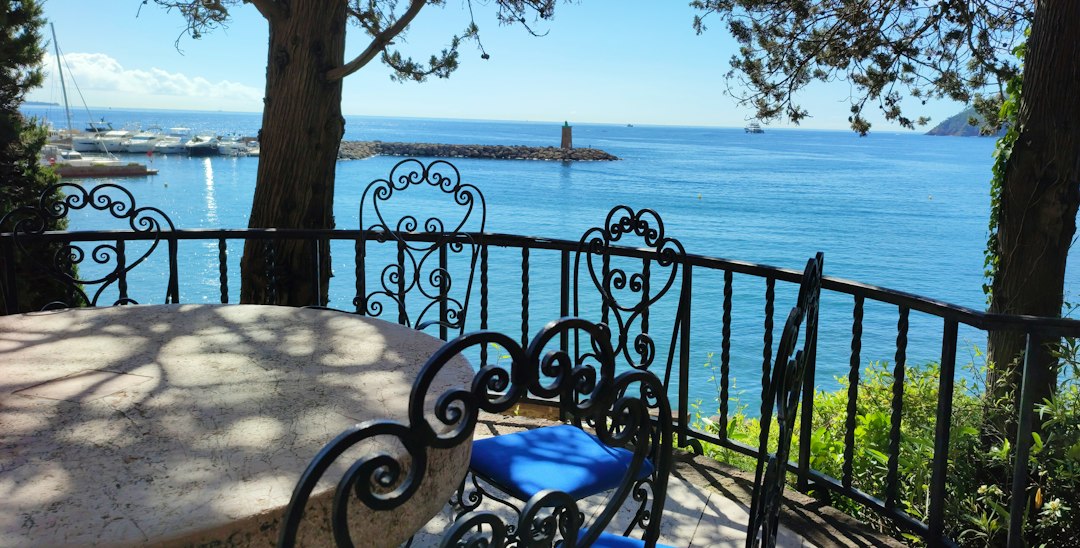
Photo by Romina Denti on Unsplash
