Summary: In oil & gas, most incidents trace back to human factors – and the classroom is a poor place to prepare for a real one. This is what we learned building VR HSE training around the IOGP Life-Saving Rules across more than 20 industrial simulation projects: what makes it work, the mistakes that make it fail, and a simple test for when VR is worth it.
In oil and gas, the equipment is engineered to fail safely. People are the variable.
The International Association of Oil & Gas Producers (IOGP) attributes close to 40% of upstream incidents to human factors, and around 80% of well-control incidents to human error. Across heavy industry more broadly, the figure is higher still. That is not a training-attendance problem. It is a training-transfer problem: people can pass a written test on a procedure they have never performed under pressure.
We’ve built VR HSE training for oil and gas operators, gas-processing contractors and national energy companies, as part of more than 20 industrial simulation projects. Here’s what we learned about doing it well, and where it goes wrong.
Start with the Life-Saving Rules, not a nice-looking scene
The most common mistake is building an impressive VR environment with no safety spine. The environment isn’t the point. The behaviour is.
The strongest oil & gas programmes we have built are structured around the IOGP Life-Saving Rules – the ten controls that prevent the majority of fatalities:
- Work authorisation (valid permit)
- Working at height (protect against a fall)
- Energy isolation (verify isolation and zero energy)
- Confined space (authorisation before entry)
- Line of fire (never enter it, or a moving part)
- Hot work (control flammables and ignition)
- Safe mechanical lifting (plan the lift, control the area)
- Toxic gas (follow the rules for toxic environments)
- Driving (safe driving, seatbelt on)
- Bypassing safety controls (authorisation before override)
Each rule becomes a scenario the trainee actually performs, not a slide they read. That framing matters for buyers too: it maps training directly to the controls their auditors and regulators already care about.
The D.I.C.E test: when VR is actually worth it
VR is not the right answer for every course. We use a simple filter, and we share it with clients before quoting anything. Build VR training when the traditional kind is D.I.C.E:
- Dangerous – a fire, a toxic release, a line-of-fire event you can never stage on a live asset.
- Impossible – a scenario that cannot be reproduced without shutting the plant down.
- Counterproductive – training that would disrupt production or occupy the people you are trying to protect.
- Expensive or rare – a procedure that happens once a year, or on equipment that costs a fortune to take offline.
If a course is none of those, a good classroom session or a checklist may be enough. Being honest about this is what earns the trust to do the parts that genuinely need VR.
What actually makes oil and gas VR training work
Four lessons show up on every project that works.
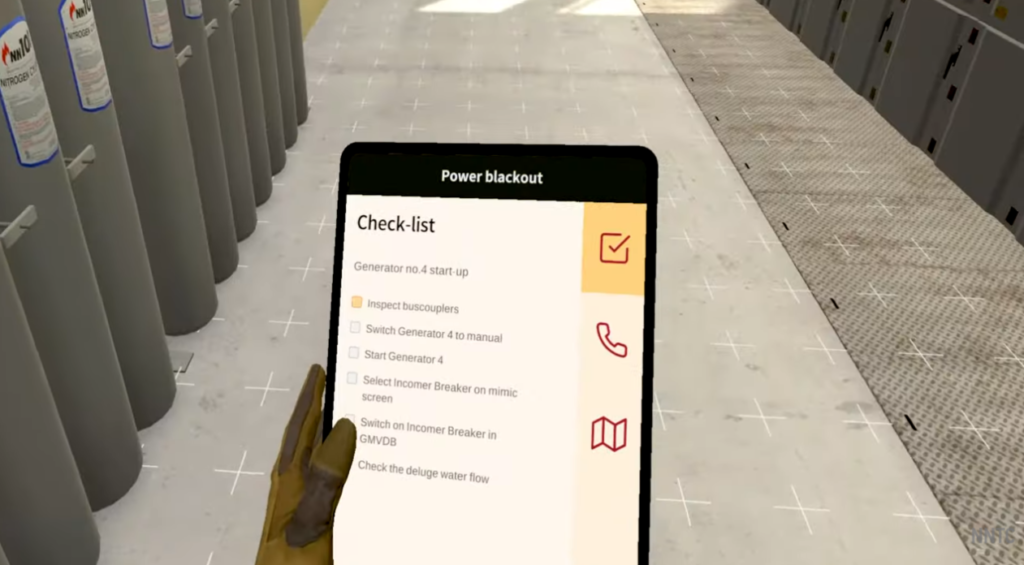
Build a defect system, or trainees memorise the film. If the scenario runs the same way every time people learn the sequence rather than the skill, so we add variable defects: noise, vibration, leaks, a valve that behaves differently today. The trainee has to read the situation, not recall it. That single design choice is the biggest difference between a demo and a training tool.
Test on the way in and on the way out. An entrance and exit assessment turns a nice experience into evidence, and it lets you show a supervisor exactly how a trainee’s accuracy and response time moved. It’s also what justifies the spend when somebody asks.
Design for the field, not just the headset. Not everyone trains in one. The programmes that scale run the same scenarios on a headset, a kiosk, a tablet and a workstation, so a remote crew or a control room mid-shift can still get through them.
Lean into emotion, because that’s where retention comes from. PwC’s study of VR training found learners were up to 275% more confident applying what they’d learned, and trained up to four times faster than in the classroom, largely because they felt the situation rather than watched it. In safety training that emotional weight is the feature, not a side effect.
What it looks like in practice
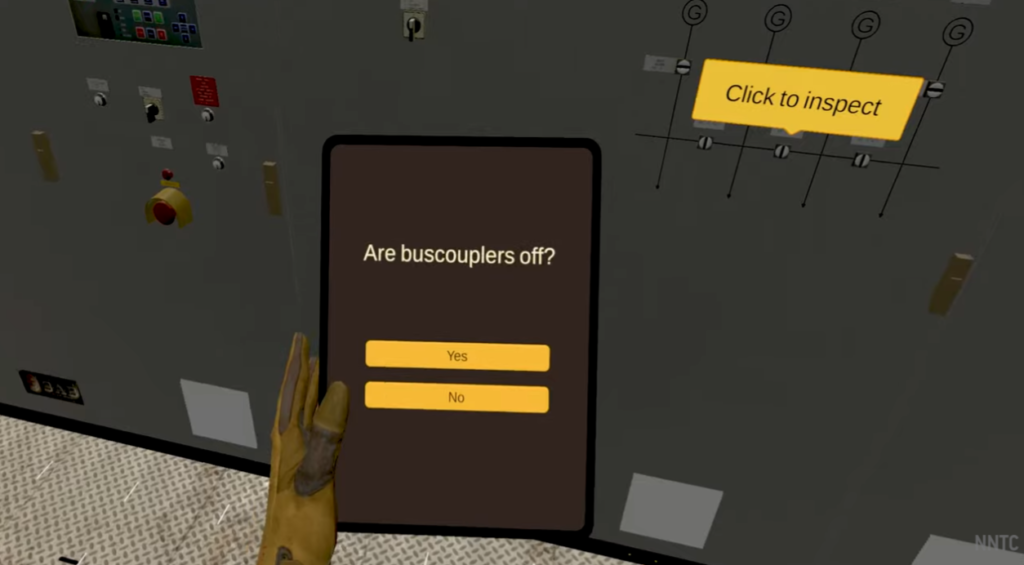
The pattern repeats across sectors. For a national oil company we built a VR simulator for equipment operation and assembly. For a gas-processing contractor, work-at-height and lifting scenarios with haptic feedback. For an oil-service company, an onboarding simulator that walks a new hire through a five-year well lifecycle in about thirty minutes.
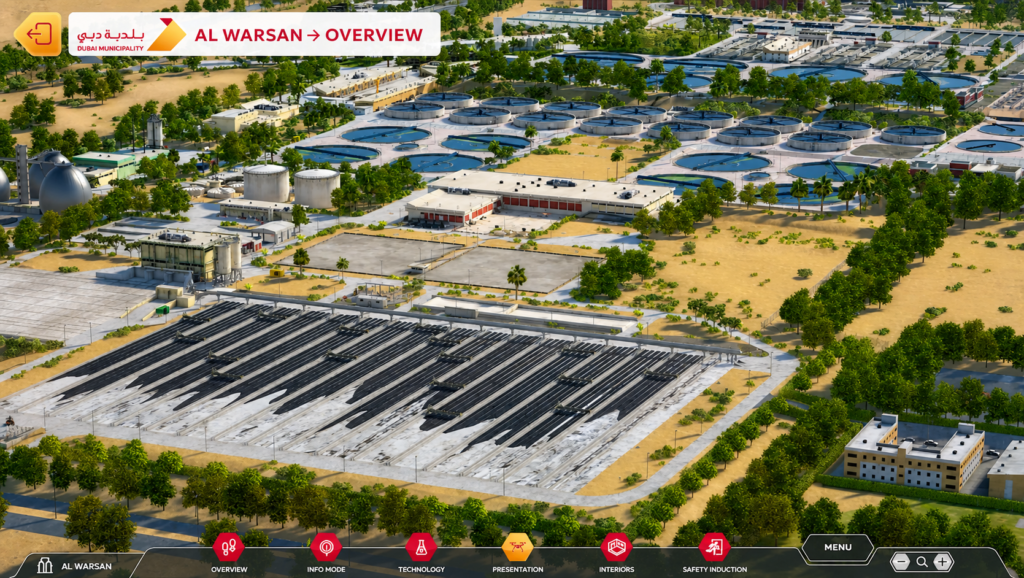
The clearest public example is Dubai Municipality, where the operator-training platform for two sewage treatment plants included three full emergency scenarios – fire, flood, and blackout – alongside VR maintenance training on real equipment. Control-room and field teams could rehearse the worst day of their careers with nobody at risk. (For the operator-training side of that work, see How digital twins improve industrial operator training.)
Where VR HSE training fits alongside everything else
VR does not replace toolbox talks, permits, or on-the-job mentoring. It replaces the gap between “I have read the procedure” and “I have done it.” Used for the D.I.C.E cases – the dangerous, impossible, disruptive, and rare – it is the most direct way we have found to move human-factor incidents in the right direction.
The best programmes treat VR as one layer in a wider safety system: built to the Life-Saving Rules, measured on the way in and out, delivered across devices, and refreshed as procedures change. Get those four right and the technology mostly disappears, which is exactly what you want.
Frequently asked questions
Why use VR for oil and gas HSE training instead of classroom sessions?
Because most serious incidents come down to human factors, and the classroom cannot reproduce a fire, a toxic release, or a line-of-fire event. VR lets crews perform the response, repeatedly and safely, which is what builds competence rather than just knowledge.
What are the IOGP Life-Saving Rules, and how do they fit VR?
They are the ten controls that prevent most oil and gas fatalities – work authorisation, working at height, energy isolation, confined space, line of fire, hot work, safe lifting, toxic gas, driving, and bypassing safety controls. Each becomes a VR scenario the trainee performs, which maps training directly to the controls auditors and regulators expect.
Does VR training actually improve safety outcomes?
It improves the two things that drive outcomes: competence and confidence under pressure. PwC found VR learners up to 275% more confident and four times faster to train. Combined with entrance and exit assessments, that gives measurable evidence a crew is ready.
When is VR training not the right choice?
When a course is not dangerous, impossible, disruptive, or rare (the D.I.C.E test). For low-risk knowledge that a classroom or checklist covers well, VR adds cost without much benefit. The value is concentrated in the scenarios you cannot safely stage any other way.
How do you stop trainees just memorising the scenario?
With a defect system – variable noise, vibration, leaks, and equipment behaviour – so the situation changes each run. The trainee has to read and respond, not recall a fixed sequence.
