A New Era of Smart Infrastructure Management with Industrial Metaverse Solutions
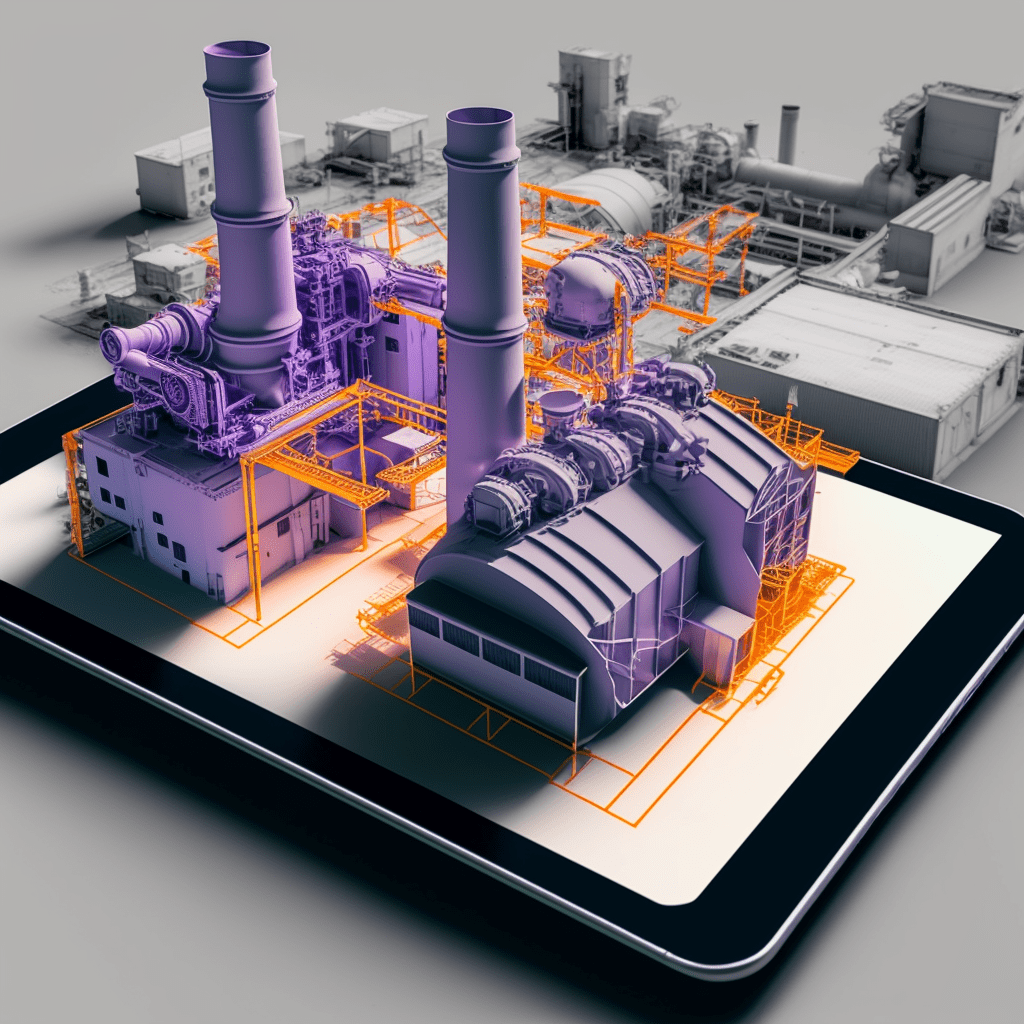
In today’s rapidly-evolving digital landscape, there is a growing demand for innovative solutions that can optimize infrastructure management, increase efficiency, and reduce costs. One emerging technology that holds significant promise in this area is Industrial Metaverse, a virtual replica of a physical asset that can be used to monitor, analyze, and optimize its performance. While Industrial Metaverse have been around for some time, the integration of IoT systems is taking this technology to a whole new level. By leveraging IoT sensors and devices, Industrial Metaverse can capture real-time data about a physical asset’s performance, enabling advanced analytics and predictive maintenance.
Daniil Gudkov,
Technology expert | Industrial Metaverse Book consultation
IoT systems integration in Industrial Metaverse solutions allows for a comprehensive, real-time view of an asset’s performance. By combining data from multiple sources, including sensors, machine learning algorithms, and predictive analytics, organizations can gain a deeper understanding of their infrastructure, and make informed decisions that can drive efficiency, cost savings, and operational improvements.
For example, in the field of smart buildings, Industrial Metaverse solutions can help building owners and operators optimize energy consumption, reduce maintenance costs, and improve occupant comfort. By integrating IoT sensors and devices, building management systems can collect data on factors like temperature, humidity, air quality, and occupancy, allowing for real-time monitoring and optimization of building performance.
Similarly, in the field of smart manufacturing, Industrial Metaverse solutions can help improve production efficiency, reduce downtime, and optimize maintenance schedules. By integrating IoT sensors and devices, manufacturers can capture real-time data on equipment performance, and use this data to predict and prevent failures, and optimize production processes.
The benefits of IoT systems integration in Industrial Metaverse solutions are clear. By combining the power of Industrial Metaverse with the insights generated by IoT devices, organizations can gain a comprehensive, real-time view of their infrastructure, and make data-driven decisions that drive operational efficiency, cost savings, and performance improvements.
As the IoT continues to evolve, and Industrial Metaverse technology becomes more sophisticated, we can expect to see even more innovative applications of this powerful combination. From smart cities to transportation, healthcare, and beyond, IoT systems integration in Industrial Metaverse solutions is paving the way for a new era of smart infrastructure management.
Are you ready to take advantage of the power of digital twins and IoT systems integration? Contact us today to learn more about how our innovative solutions can help you optimize your infrastructure, reduce costs, and drive performance improvements.
The world of industrial business has always been a complex and challenging one, with a multitude of factors to consider when making critical decisions that can impact the bottom line. However, with the rise of digital twins and the industrial metaverse, businesses in this sector now have access to powerful tools that can help them optimize their operations and achieve greater efficiency than ever before.
Daniil Gudkov, Technology expert | Industrial Metaverse Book consultation
Digital twins are virtual replicas of physical objects or systems, created using real-world data and advanced modeling and simulation software. These digital twins can be used to analyze and optimize the performance of complex industrial systems, allowing businesses to identify inefficiencies, reduce downtime, and ultimately save money.
However, digital twins are just the beginning. The industrial metaverse takes things to the next level, by creating a virtual representation of an entire industrial system, including its components, processes, and workflows. This virtual environment can be used to simulate and optimize every aspect of an industrial operation, from the manufacturing process to supply chain logistics.
The benefits of the industrial metaverse are numerous. By creating a virtual environment that accurately reflects the real-world conditions of an industrial system, businesses can use the metaverse to test different scenarios and identify potential problems before they occur in the real world. This can help to reduce downtime and minimize the risk of costly errors and accidents.
In addition, the industrial metaverse can be used to create immersive training experiences for employees, allowing them to learn how to operate complex industrial systems in a safe and controlled environment. This can help to improve safety and efficiency, while also reducing training costs and minimizing the risk of accidents.
Ultimately, the industrial metaverse has the potential to transform the way that businesses in this sector operate, by providing them with powerful tools for optimization, analysis, and simulation. By leveraging the power of digital twins and the industrial metaverse, businesses can achieve greater efficiency, reduce downtime, improve safety, and ultimately save money. As this technology continues to evolve, it will be fascinating to see how businesses in the industrial sector use it to transform their operations and stay ahead of the curve.
Let’s talk about inventory drones, their “brains” and capabilities, how all this stuff works, and how drones can have your back in the case of wrong pallet marking.
From our previous posts about drone-based inventory, you already know that drones cannot fully replace humans since they cannot handle tricky non-standard cases, but, at the same time, they show unprecedented accuracy and careful record taking.
Today, I will tell you how UVL Robotics solution helps detect possible errors and inaccuracies during standard warehouse inventory.
Pallet scanning with no duplication
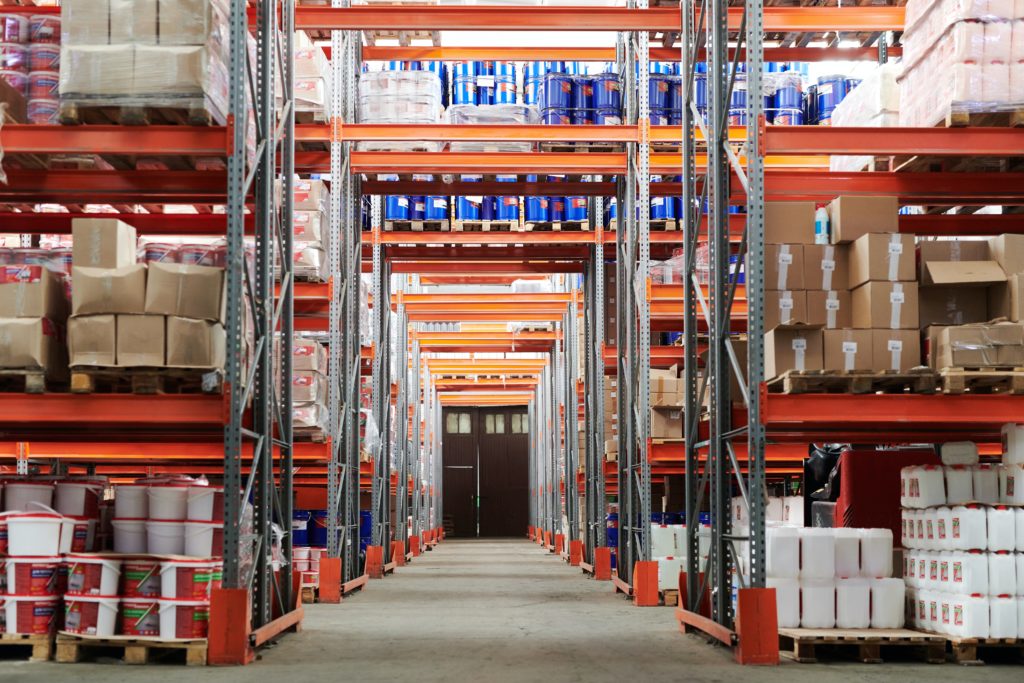
Every pallet is marked with a unique barcode that will be recorded in the accounting system to track the pallet location and keep the warehouse records. Unfortunately, sometimes an employee may lose count and scan the same pallet twice, which leads to accounting errors or even rack double-checks.
UVL Robotics software has an embedded specialized filter that prevents barcode duplication and creation of repeated pallets. In other words, if a drone scans the same pallet with the same code assigned, the algorithm considers it a duplication and reports an error. Therefore, this helps avoid errors emerging by accident or inattention.
In rare cases, the same barcodes can be assigned to different pallets, which happens either by mistake or in line with the customer’s preferences. In this situation, the filter reads this error up to three times. After the third reading, the counter is set to zero and the barcode can be reregistered as another pallet, which might take a little more time. Statistics can be collected manually as the UVL Robotics solution allows you to switch to manual mode and flexibly adapt to specifics of tricky marking.
Putting every pallet in place with inventory drones
Every pallet has its own unique barcode is assigned to a particular warehouse location, to a particular cell.
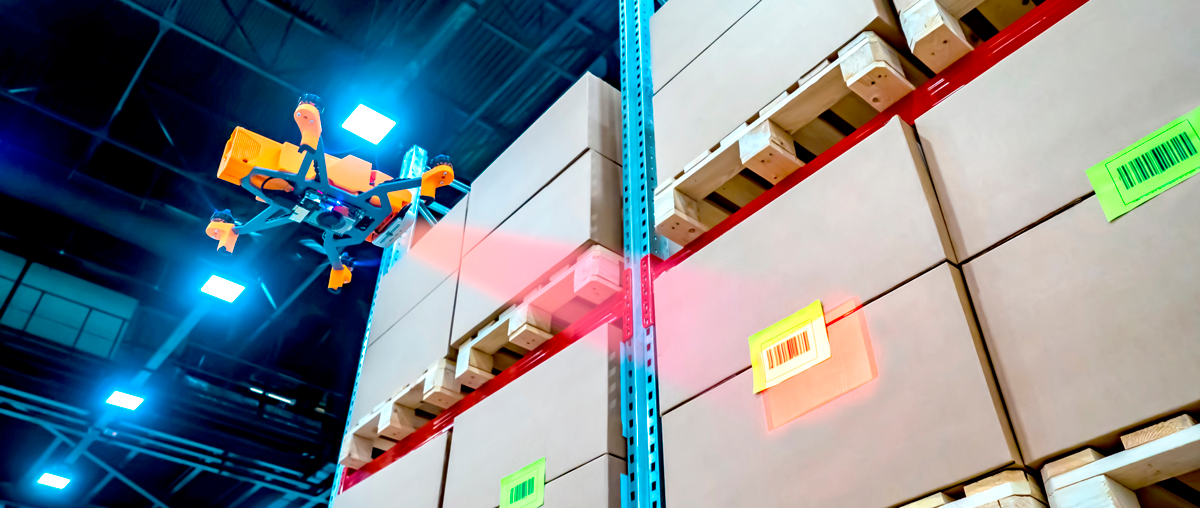
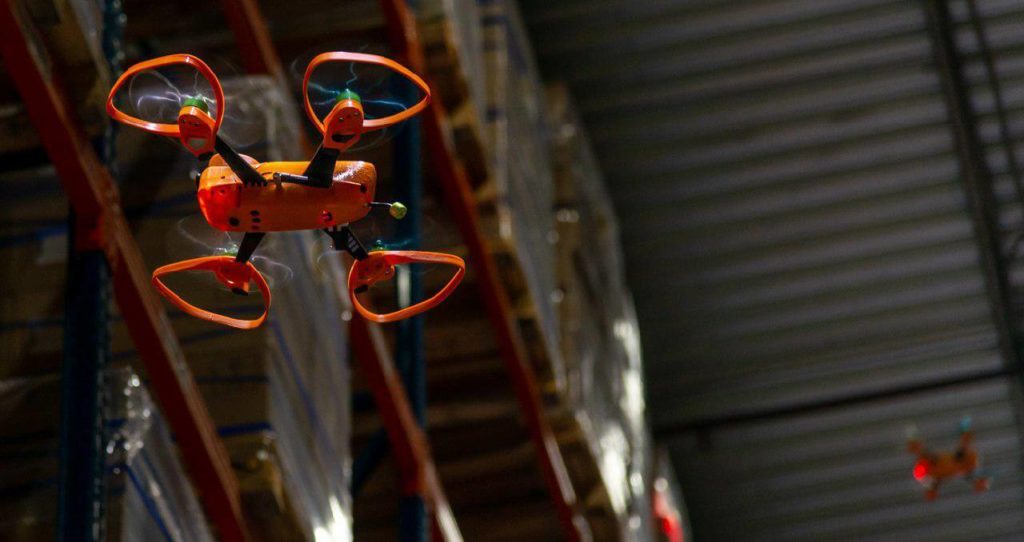
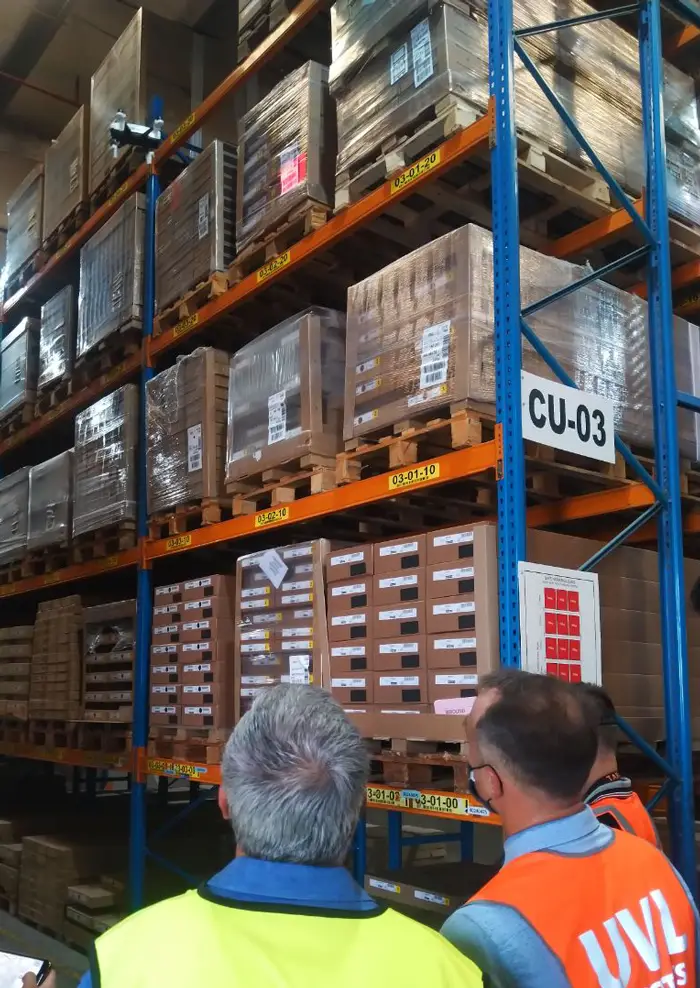
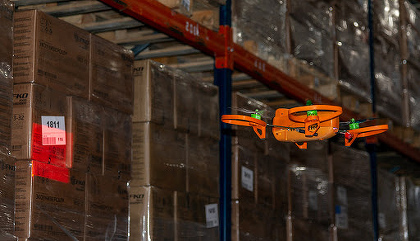
Drones scan pallets rightwards and downwards, moving along the warehouse racks. The inventory drone pilot watches the drone-scanned cells highlighted in the warehouse layout via tablet. It’s like reading a book where a rack is a page and pallets are words.
The table accumulates not only pallet numbers and their barcodes, but also their locations. The report you get displays all deviations from the ideal pallet location. If there is an error or products are not in their cells, this problem is easily detected and handled.
Universal logic and adaptable report
The process can be customized. If you want to solve an unconventional task, we can easily adapt the tool to your business. However, considering the previous solution demonstrations and implementations, I can tell that customization is often left unrequired as the drone boasts all the necessary functionality to accelerate inventory taking and create user-friendly reports.
We can also prepare reports in a format familiar to the customer, as well as configure the filters to detect additional marking. For example, a drone can be set to scan multiple barcodes assigned to the same pallet with a further display of this data in the report; this is easy to do and usually negotiated before the works start.
If you got interested in this solution, learn more about it on our website or get a consultation with our experts.
A man in a modern world has picked up another curious anxiety, which is hotly debated in the community of psychology professionals and enthusiasts. FOMO, or fear of missing out, is the feeling of apprehension that one is missing out on exciting events and experiences from which one might benefit emotionally. This fear consumes you, makes you scroll through social media miserably, and feel bitterly jealous when you see other people living the high life on Instagram, while your life is not that shiny.
And now, ladies and gentlemen, I give you a new kind of FOMO specific for retail business owners. This one makes you feel a fear of missing out on an opportunity, losing customers, getting outsmarted by competitors with a better pricing policy, and failing to be quick enough to respond to market trends related to promotional activities. Now, this fear makes you scroll through your competitor’s websites miserably to catch any meaningful change in prices and offerings. You know how that feels, don’t you? The majority of online marketplace and offline store owners do.
The good news is that we know the way out of this and it’s called Metacommerce, an algorithm that will solve this problem once and for all.
Lost opportunity hurts the most
We help many different brands and businesses: FMCG, marketplaces, even niche stores because the solution works well with many different products. Since I admire technology, I’d love to use online electronics stores to illustrate how the Metacommerce algorithm works.
A lost opportunity is the worst for our customers, especially when it comes to catching customers’ attention. For example, when the same cell phone model is available at your competitor’s store at a better price, it means that your competitor takes a decent share of profit out of your pocket.
How come? There is usually more than one reason:
Late pricing policy updates (a blockbuster movie hero had that cell phone model, so fans rushed to buy it, and competitors raised prices to catch a hype wave)
Lack of information about seasonal patterns (holidays are coming and people start buying bigger gifts)
Discounts and better deals are either ahead of or behind the market (did you know that the current year had three Cyber Mondays in a row, and cell phones simply flew off the shelves?)
How Metacommerce algorithm parses your competitors
Metacommerce goes omnichannel to collect all necessary information quickly and efficiently. The algorithm analyzes brand websites, mobile apps, marketplaces, and extensive supply chains, from large distributors to particular online stores. It goes even further if the market competition is fierce (only the strongest will take it all!) by providing functionality for scanning and recognizing price tags in offline stores.
The algorithm is pretty simple: Metacommerce parses given sources, analyzes information received, and generates a report every two hours, for example, or every day at 9 am (depends on personal preferences).
The algorithm gets to every publicly available source of your competitors like a boss to analyze both what is offered in specific product categories of marketplaces and by online chain stores. It can also download the hash of the page and automatically read all necessary information, even recognize the text in the pictures.
Our killer feature is the automatic comparison of the competitor’s assortment with your own (with a bunch of parameters inside!). You have a hundred TVs – a competitor has 200, Metacommerce will find the right ones itself.
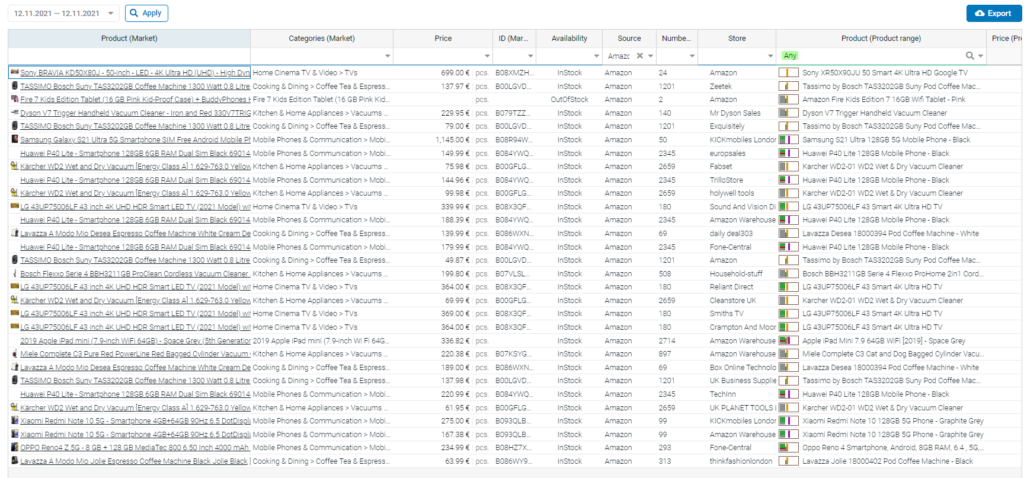
Some Metacommerce interface
Metacommerce algorithm works delicately without getting you into trouble when interacting with websites and that’s just gravy because usually parsing scripts are quite brutal and are often recognized as a DDoS attack to be instantly blocked, but Metacommerce like a cultured guest never abuses the network.
What a Metacommerce report looks like?
…Well, it’s cute. If you want to learn more, please keep reading 🙂
Metacommerce stores all information in a practical table format, so that you could filter and export it, view history graphs, and put it together into informative yet simple reports. Each product in your offering has an ID that automatically correlates with the corresponding SKUs of your competitors.
Product range comparison
Let’s say several distributors offer Playstation 5 on the online marketplace. Two of them are official stores and one is a greedy scalper; so greedy that you just wonder if that’s a price or a phone number in the ad. You put your Playstation 5 on sale too, but you really want to avoid both underpricing and overpricing. So how to choose the best price?
Open a Metacommerce report – it’s that easy. There you will see the entire list of Playstation 5 consoles on the websites you’ve asked to parse:
Official store price
Various distributors’ prices on a marketplace
Price fluctuation over time (you might even get surprising insights, like discover that a discount is not a miracle, but a seller’s trick to keep up with the sale rush)
Detailed information about the product is included: brand, distributor, marketplace, and offer details
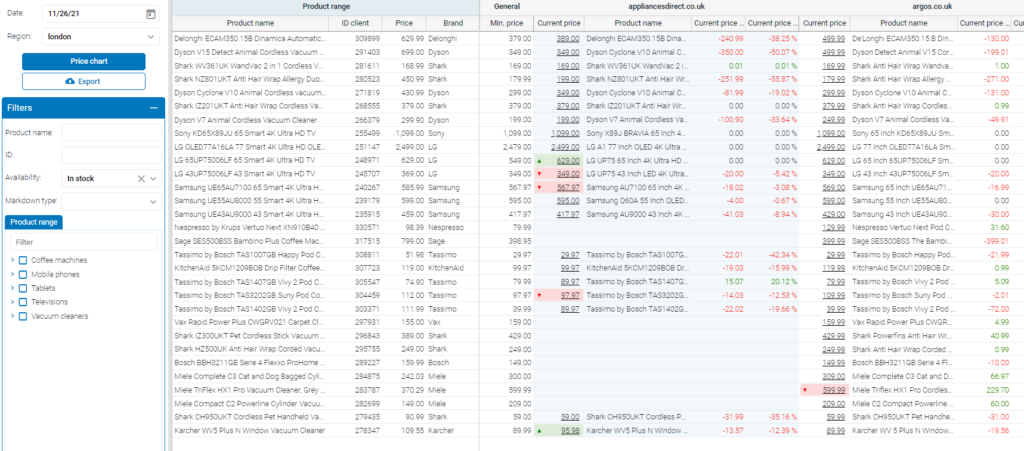
If different models of the product are analyzed (for example, Playstation 5 with different storage), you’ll see a specific model price compared to the price of a corresponding model on the competitor’s site. All clear.
Plus, in addition to comparing 1 to 1 (complete coincidence in the parameters), Metacommerce can compare products by similarity (PS5 and Xbox) or even show useful products that you do not have in your assortment.
Metacommerce offers online dashboards; and you can add an unlimited number of users having their personal accounts.
Easy to get started with your data
Metacommerce process can be launched in a few steps:
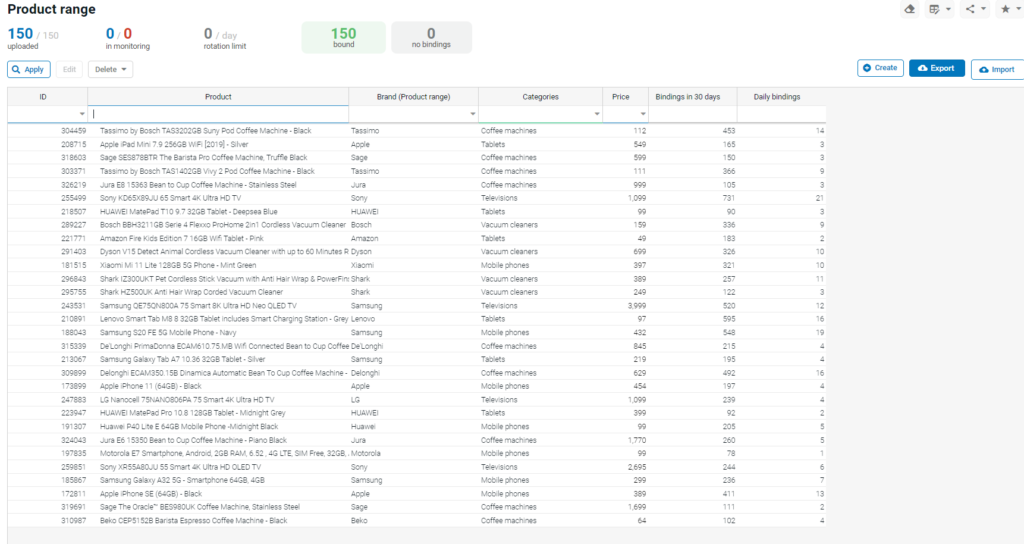
Upload a product table into the database (e.g., export one from your ERP system)
Specify the sources you want to track (competitors’ websites, sections on marketplace sites, etc.)
The software will match the parameters of a product in your table against those of a similar product on your competitor’s website to find correlations between lots for further price tracking
Congratulations! You’re ready to parse
The range of products will be updated automatically from that moment on, so you will immediately know which new models are added on the website and which are no longer available.
Now, imagine that you know every point of your competitors’ pricing policies and it takes just 10 minutes a day to complete the analysis. Furthermore, your potential customer is ready to pay lots of money for a new laptop, and this customer knows what model they want exactly: memory capacity, operating system, brand, screen size, and even the color of the keyboard backlight. The customer filters the search item by item and narrows it down to two identical models priced differently. One price is random, the other is yours, strategically calculated through Metacommerce.
Who do you think will be the winner? You will. (Oh, and the customer, of course – the customer always wins).
Minimize human errors by practicing scheduled maintenance and emergency activities in a safe environment of VR training.
Why VR trainings are effective for water treatment companies?
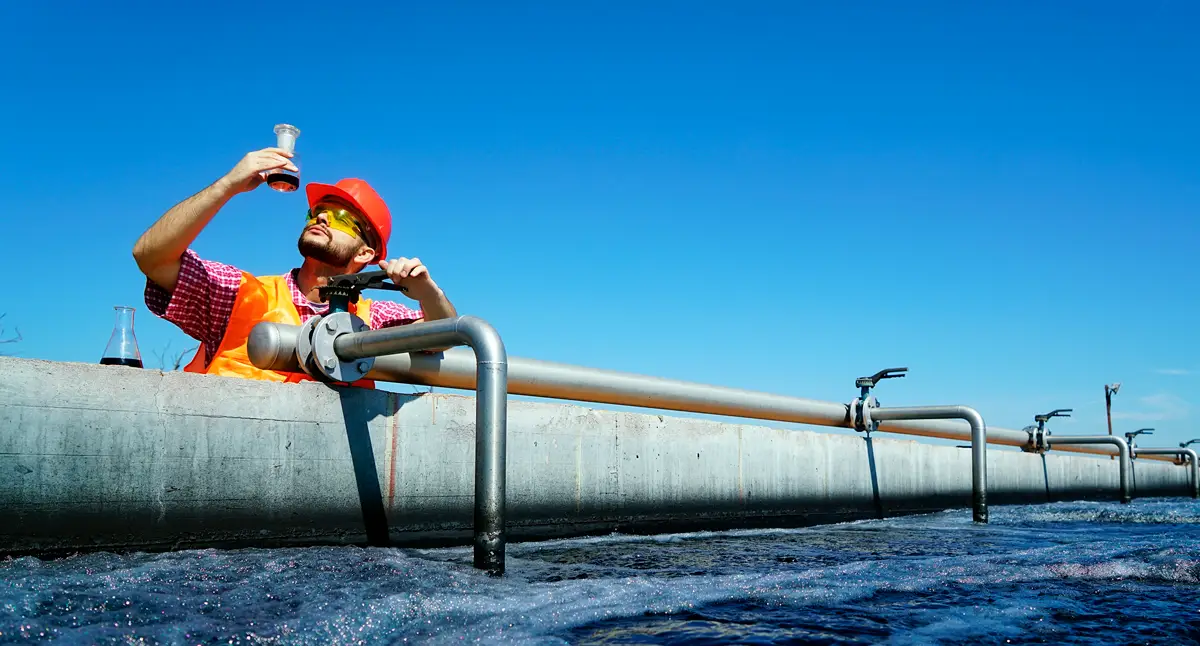
Virtual reality provides the simulation of training scenarios that are hard or impossible to recreate in real life, such as power line accidents or high-voltage operations. Today, advanced manufacturers, including water treatment companies, actively adopt such solutions.
In the course of training, personnel can practice the scenario-based operation of water treatment equipment with visualization of all possible error consequences, and then pass an exam and start performing their duties right away. Such trainings reveal employee reactions to any emergency or tricky situations when the test doesn’t follow the usual scenario. The test results are always available for the employee’s supervisor.
Moreover, a full-fledged VR simulator is a cost-effective solution that will be five times less expensive than creating its physical analog. VR simulator is easier to scale. It can be flexibly adapted to the ever-changing infrastructure and equipment of water treatment facility compared to physical simulators, which quickly become outdated and take a lot of time and effort to be updated.
VR training details
VR training includes a hardware and software suite of interactive visualization tools with a set of training, hands-on, and testing scenarios. A virtual workplace simulates the real environment and equipment, while training scenarios represent routine and emergency procedures.
Training participants/roles:
Trainer. A trainer uses a training module to add users, assign training topics and testing, manage scenarios, and generate statistics on training results.
Trainee. A trainee uses a VR simulator to practice routine procedures and take tests. However, trainees also can practice hands-on skills without a mentor at any time.
Supervisor. A supervisor receives training or testing results in the form of an Excel spreadsheet report and video records of the completed session.
You can also track the specific metrics to evaluate the session’s or whole course’s effectiveness – detailed statistics show each employee’s retained knowledge and preparedness to work:
Time to complete a training scenario. The time begins once the VR simulator is started, and stops, when a training scenario is completed. You can track how the learning pace of your personnel changes over time.
Task fulfillment accuracy. This shows the percentage of actions performed correctly in training scenarios. You can track how the level and quality of personnel training change over time.
The number of trainees per month. This shows how the number of personnel trained to perform the work changes over time.
What do you get in VR training format?
Spoiler: almost anything!
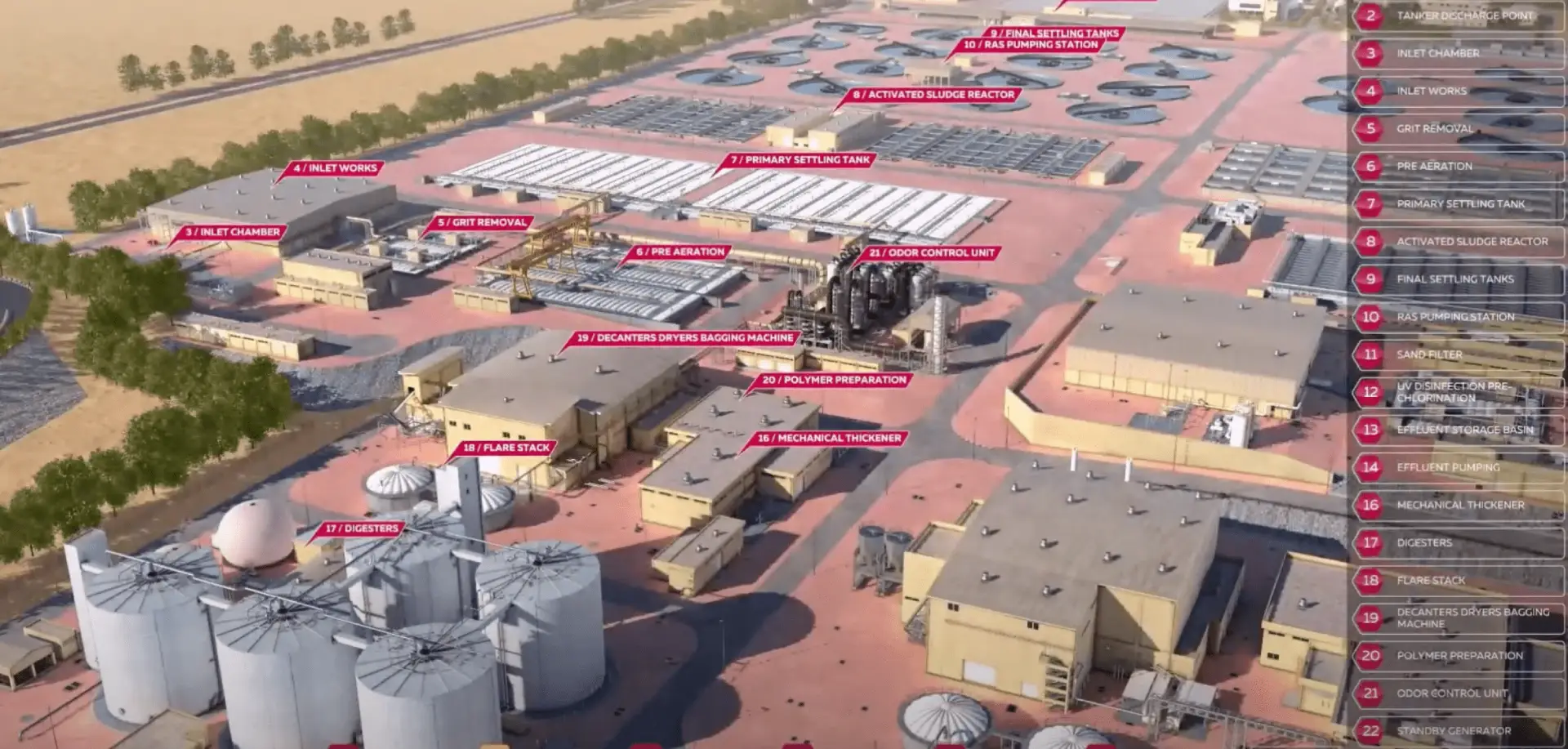
The training complex for the water treatment plant includes:
Interactive maps of production areas with integrated training scenarios. We recreate not only rooms of your facility, but also the exterior premises with realistic interactive equipment.
Training simulator for operating personnel based on the plant’s mathematical model (for example, a copy of the plant automated process control system).
VR training simulator for maintenance personnel to train their repair and maintenance skills on requested equipment: decanter centrifuges, thermal dryers, solar dryers. Our team of qualified analysts and developers with experience in implementing VR simulators for industrial enterprises has all the required experience to recreate any equipment in VR (electrical safety, water treatment, health and safety, metallurgy, and more).
VR simulator to practice any emergency drills: fire, flood, blackout, high altitude, explosives, high-pressure works, high voltage. Test your employees’ reactions and skills!
User and business benefits
Faster and better personnel training. Continuous personnel training and qualification testing
Less human errors. Practicing skills in standard and emergency situations
Reduced risk of injuries and equipment damage. Increased awareness when operating real equipment
NNTC creates a product that really adds value: we identify business needs, design architecture, develop a simulator, scale it, and embed it in a business process. Are you interested in such VR training for your company? Contact us!
Trying to decide on how to integrate innovative technologies into business in the most beneficial way, managers oftentimes find themselves asking a reasonable question: “Which course is better: to rely entirely on technology or let humans retain control over the majority of functions?”
Your answer to this question will determine areas of responsibility and, what’s more, it may make the difference between the stunning success and total failure of a particular innovation. Why so? Because it’s crucial to consider your business context and conditions when adopting a new technology.
With that in mind, today we will try to provide an insight into how to choose a better warehouse stocktaker. When is it worth training AI to send the autonomous drone on the preset courses? When is it reasonable to hire a professional to pilot a drone manually? How not to come off a loser and invest in the right approach?
When a professional pilot is a good choice
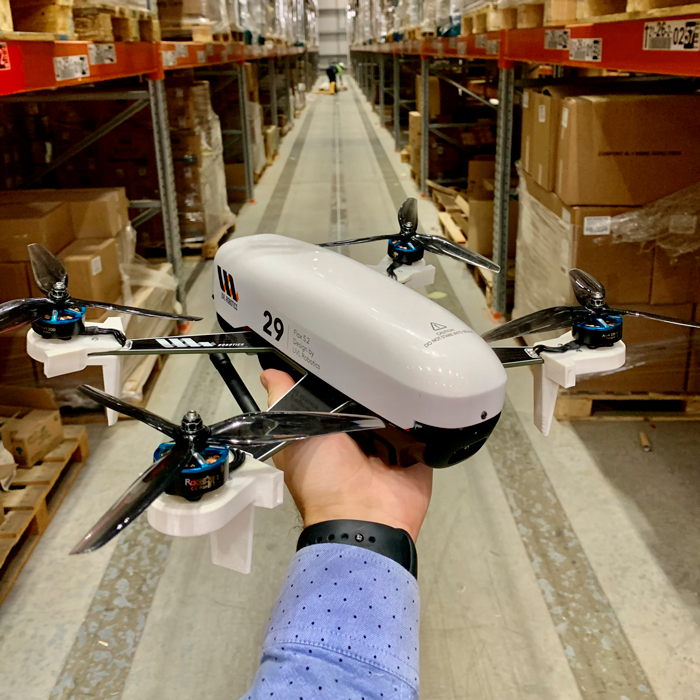
Poor GPS signal. A GPS signal struggles to get through the walls indoors, making it impossible to use any basic drone. Pilots, however, can use a built-in independent positioning system to navigate around, without any need to rely on satellite connection.
Fast result. Autonomous drones can’t be rushed: their moves are slow and steady. If you can’t wait to get the job done, the pilot will help. Pilots are well acquainted with drone racing, have a trained eye, and know how to navigate through small spaces at high speed.
Frequently rearranged warehouses. An autonomous solution uses a custom warehouse layout, which works for the warehouses that haven’t changed its structure for years. If, however, a warehouse is often restructured and the logic of pallet storage drastically changes, it will cost a fortune to train a drone to navigate a new storage system each time. In this case, a pilot is a better option, since no expensive AI training is required.
Service model. Taking it as a service means that you invite a pilot with a drone on a convenient day, agree on the area to be inventoried, and enjoy the result in a few hours.
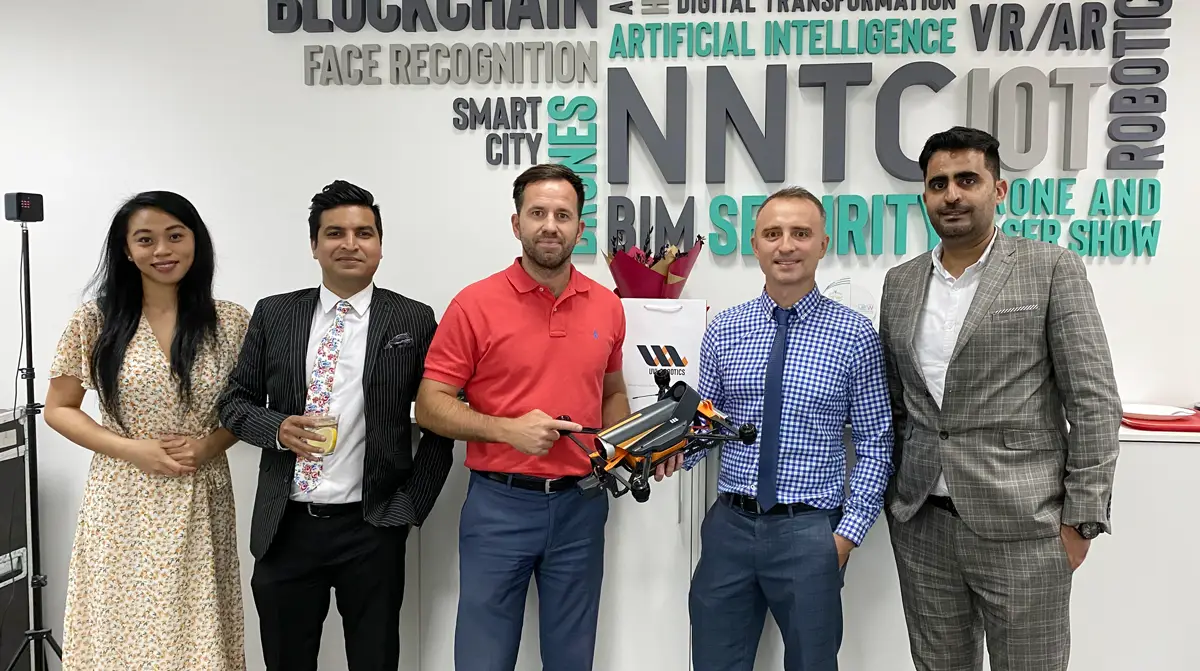
Remember that using a drone requires specific professional skills. Usually, all professional pilots have experience in drone racing, like that colleague I worked with at a demo in the UAE, who knows both piloting and engineering. Stocktaking is not a big deal with these skills. Once you have learned how to ride a mountain bike and jump over rocks just like that, an ordinary ride in the park becomes easy stuff, if not a dull routine.
Autonomous drone for the warehouse
If you like an idea of having a company drone at your service, consider the following conditions to make this new solution a success:
Strong GPS signal. It’s just a nice thing to have, because it will save you a lot of headache.
Patience and readiness to train the drone. To finally see a drone carefully flying around your warehouse on autopilot and doing tasks all by itself, you will have to be patient, because it takes time for a drone to learn your warehouse layout. Read more about training autonomous drones in our post “How stores can get the most from innovative technologies by using drones at warehouses and robots in shopping areas”. But remember that a drone on autopilot simply can’t operate as fast as one controlled by a pilot.
Warehouse has a permanent layout. In this case, a custom navigation system is created for the warehouse, with a dataset collected, warehouse model designed (to help the drone track its location), and grid reference provided. Reference points can be established by sticking tags across the warehouse or embedding those into a layout model. If the layout or pallet location changes, repeat the procedure to update the drone with the most recent information.
Project framework. It takes two month to deploy a solution with an autonomous drone (may vary depending on the complexity of the warehouse), which includes data collection, neural network training, solution testing, and fine-tuning.
Note that deploying autonomous drones is a full-fledged project, which will also require a team of specialists. Collecting a dataset is just the beginning, as you also need to train the drone and make it understand that the task is to search for barcodes and find them.
How much does it all cost?
An autonomous drone might cost you more, because of the effort required to implement this solution. However, it will pay off, if implemented in specific warehouses: hazardous chemicals storage, oxygen-free, or extremely cold rooms.
For a common warehouse, the service model is more cost-effective, when a pilot visits the site on a certain day and conducts inventory. At the end of the day, you get the final report matched to your system, while enjoying cost savings as well, since you haven’t had to halt the operation of an entire warehouse for several days of stocktaking. Speed, accuracy, and resource savings are worth the price.
If you are interested in trying drones at your warehouse, please feel free to make an appointment and ask any questions you may have.
How to sell products in a world where most people protect themselves against excessive information? Hologram table is the answer.
Have you ever heard of clip thinking? It is a wonderful ability of our brain to catch the most important, bright, and valuable information from the boundless ocean of data surrounding us. Fortunately, most modern people have exactly this type of thinking. We are good at memorizing new and unusual patterns, while monotonous information is not retained for long.
How to prove that your offer is something that deserves to be retained in other people’s memory? The solution does exist. I’m telling you about virtual and augmented reality— innovative technologies, which involve customers in the demonstration process and make them active participants.
Hologram table for real estate companies
Any sales manager knows about the “wow-effect” but few have ever seen how it works. It is difficult to surprise customers now since they are educated, knowledgeable and familiar with the newest products.
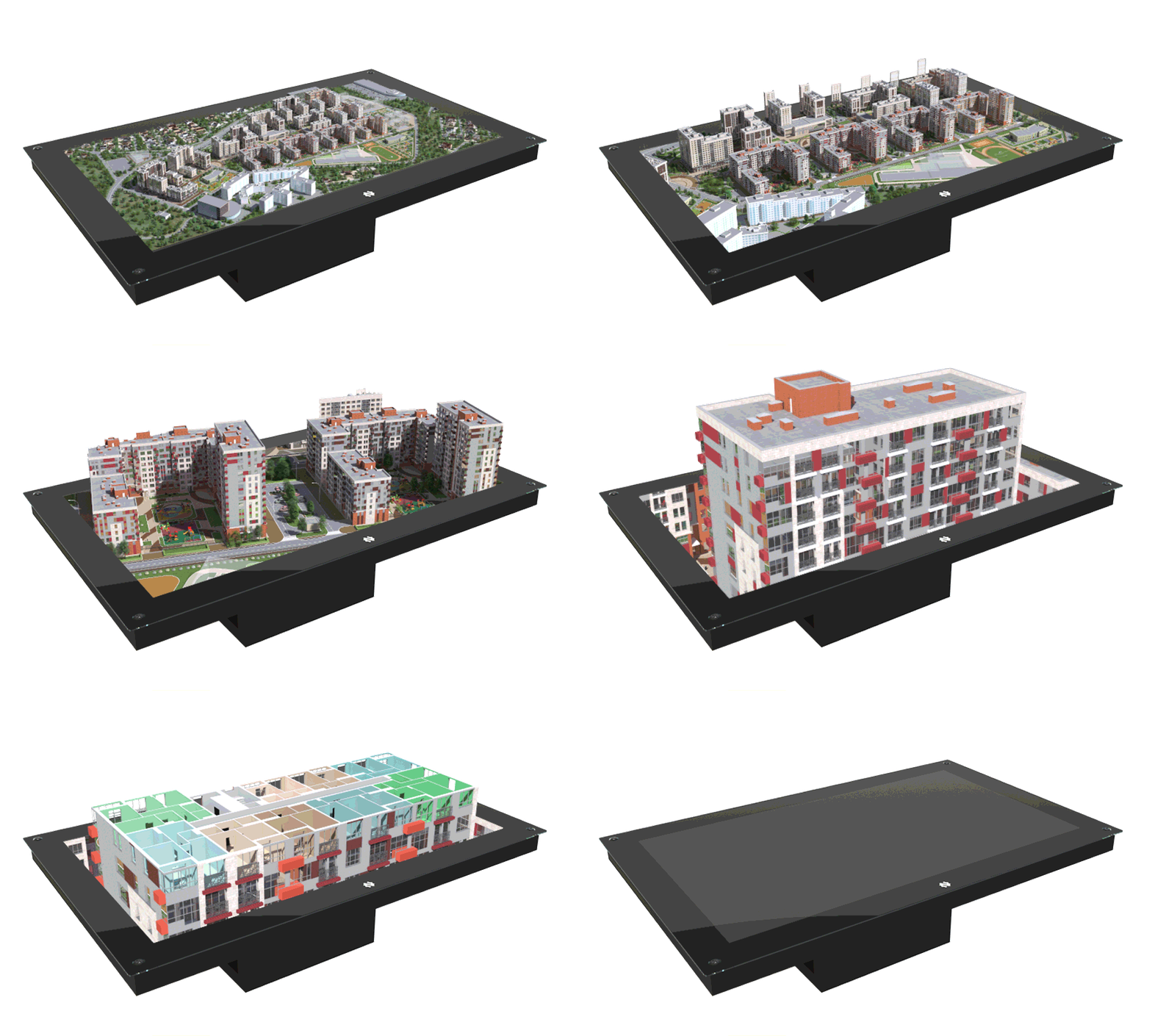
However, there are innovative solutions that entered the market not long ago and haven’t become trite yet, such as hologram tables showcasing detailed 3D models of buildings or entire residential clusters. Interactive 3D models can help increase the potential of any building presentation and attract your audience during exhibition or client meetings.
This technology helps focus on detail: rotate, zoom in or out, ‘take off’ the roof and look at floor and room layouts, see how future residents will park their cars in the underground parking lot, and enjoy a bird’s-eye view of their entire district!
Why do clients enjoy presentations with hologram table?
Unlike traditional mock-ups, a hologram table speeds up a consultation by up to 10-30 minutes and gets 89.3% of positive reviews after the demonstration! We at NNTC can understand people who are lining up to try hologram table during exhibitions: we show presentations and videos a lot, but nothing compares to real experience when you walk around the hologram table and see a 3D building rotating with you.
While moving around the table, the patented system of high-speed cameras tracks the position of the user and renders the image to give a 3D view of the building from the right angle. This is a new customer experience, it provides a realistic view for people that have no time to go on-site, and, finally, it’s cheaper: you have one hologram table as a device with an unlimited number of models that can be installed. You can upload your own catalog of different objects: from a small house to a big five-star hotel.
The solution can display designs of any scale, from a single facility to the entire district, making it possible to zoom in and out various structures and cover much more project details during the presentation.
Are you interested in this solution? Contact us and we will share additional details!
Tailoring innovation to customer’s specific task or business process has always been a second nature to our team. When cutting-edge technologies are integrated into any business process, many questions arise. Addressing them, we sometimes even dispel myths about some solutions and their functionality during a demo. Today, we will give answers to the most frequently asked questions about a drone-based & AI inventory solution for warehouse inventory by UVL Robotics.
Technology is like a set of versatile tools. Any problem can be solved with it, if you know how it all works at a fundamental level. In fact, innovation derives from a few pieces of technology successfully combined, thus creating a new product to get a particular job done effectively. The idea of a sci-fi future inhabited with smart robots and flying cars in a Blade Runner esthetics is a certain inspiration for us, like for all others. This is fantastic, but the primary goal of technology is to solve relevant problems using twenty-first-century tools.
Drone-as-a-service is a user-friendly solution to streamline warehouse inventory. It helps warehouses promptly handle inventories without extra time or money investment – read our previous post to learn more. Today, we will dive deep into solution functionality, what it can and can’t do.
Myths about drones and warehouses
Myth #1. Tricky when open
“Is it possible to count the exact number of boxes/products in an open pallet with this solution?”
That depends on the type of your pallet: a full or a mixed one. A full pallet is a completely sealed package with a certain amount of products inside and a barcode and other product information stuck outside.
Our drone-based solution is better at counting full pallets, as it scans the code from the sticker and sends the information to the server. Now, we need to know the number of boxes in one sealed pallet to easily calculate the total on the rack and at the warehouse.
It is not uncommon that somebody opens these pallets to pick up and deliver a few products to customers, which turns full pallets into mixed ones. Technically, our solution can scan the barcodes on such pallets and take a picture of a mixed pallet on the shelf, but it will be difficult to determine the exact number of whatever is inside. Products might be taken from the middle of the pallet (the rest forms something like a “well”) or from the side, which – should the pallet be turned – will face a wall and remain undetected at the time of inventory.
Here is what we can offer: a drone will both scan pallets and take pictures to report on each pallet in a warehouse. Each picture will be linked to the scanned barcode in the report. In addition, pallets can be labelled as mixed or full, so if there are a few mixed ones, the products inside can be counted manually or using a picture taken earlier.
Myth #2. Wrong stickers
“What if our employee puts a sticker on a pallet with the wrong barcode? Would you be able to fix it during warehouse demo?”
A drone is sadly unable to make it right. Perhaps a day might come when we can fully rely on machine intelligence and the drone’s commitment to a company, but not today. Currently, a drone only scans barcodes and records the pallet’s condition and location without carefully reflecting on what it is doing.
Myth #3. Any drone can take warehouse inventory
“Why do you use custom drones when there are plenty of common ones that you can easily make fly?”
It’s not that simple. In case of warehouse inventory, a standard drone, which can be piloted by almost anyone, is unlikely to take stock indoors, because such a drone is using GPS. It is challenging for signals from a satellite to pass through metal structures and thick walls of a warehouse, so a standard drone will be less than useless.
We use a custom drone with a built-in navigation system to dodge between racks without help from the GPS. Our experienced pilot can skillfully navigate the drone, which is yet another booster that helps complete the job fast.
Why warehouse demo matters
A demo at a warehouse is an efficient way to bury myths and see solution benefits in a real-life situation. After all, like I said, a product is created to solve a specific problem, and a demo will help you understand whether this solution makes sense to your business.
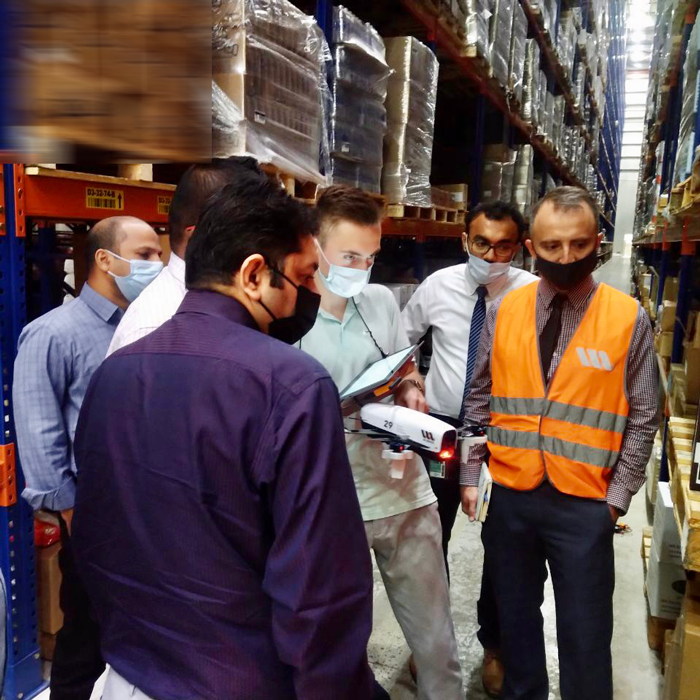
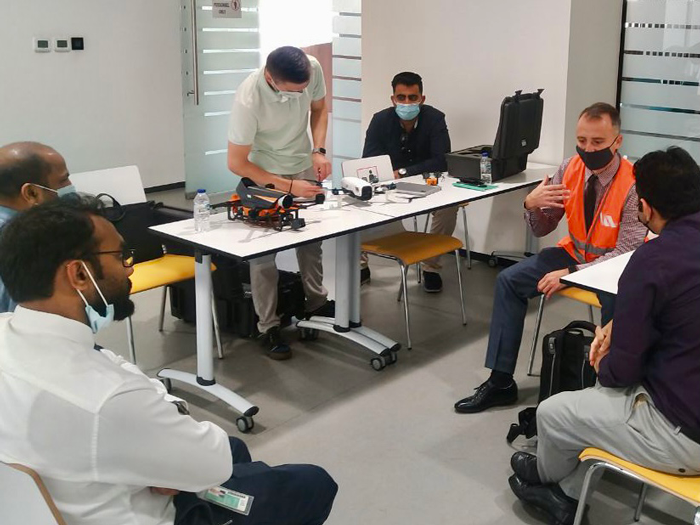
Our team has given demos for eight major warehouses in the UAE so far, including Abu Dhabi Ports. The demo includes the following:
A brief presentation to describe essential points of the solution and its main advantages (fast stocktaking, cost-efficiency, no heavy equipment involved, no warehouse downtime, etc. – my previous post covers everything in detail).
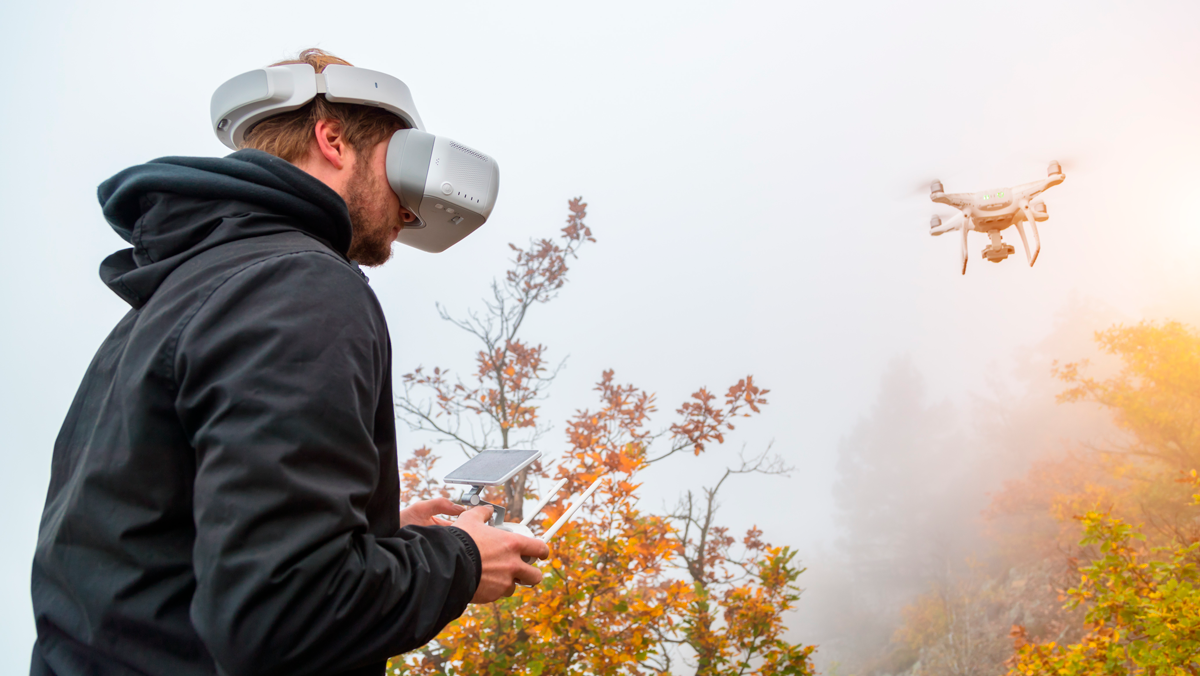
Moving on, a pilot has an assembled drone ready to demonstrate how the solution works. The drone flies between the racks and scans the pallets. A tablet allows you to watch and control scanning, as the scanned areas are highlighted on a warehouse model.
When information is collected, we export the report in an Excel file for you to review and study it carefully.
Finally, there is a Q&A session and a small amusement. Anyone can try on our pilot’s VR headset and enjoy the first-person view of the flying and scanning process.
We’ll be happy to give you a warehouse demo. Just answer a few organizational questions (to let us know the type of your warehouse) and choose a day convenient for a demo. No additional documentation is required. We are always ready to go.
How does your FMCG business feel in this game-changing 2021? Have you experienced tougher competition and more complex customer requests or, on the contrary, your business skyrocketed to the top of the world?
FMCG companies that implement digital transformation practices in their businesses have fewer losses during 2021. We studied multiple FMCG market researches along with our trusted partners to bring a special selection of innovative solutions to help you catch up on lost profits and strengthen your position in the market.
Drone-as-a-service for warehouse inventory
This solution is designed to save both time and money, if you face an unscheduled warehouse inventory. A skilled pilot arrives at your site with his own drone. Drone uses a 2D scanner to capture information from pallet barcodes at any height. It’s as simple as that: one drone can deal with 10,000 pallets in an hour, ensuring almost 100% recognition accuracy! No more time wasted, as you will no longer need to order additional equipment, reschedule warehouse shifts and make your employees work during weekends.
This solution is easy to implement but yet highly effective. It’s a useful tool for your employees to manage store performance. Ailet analyses shelf photos taken by a store clerk and detects different errors: incorrect price tags, misplaced products and other factors that reduce store profits. You can boost your team’s performance and get OSA +7%.
We also offer a powerful solution for supply chain planning and optimization. (By the way, it is based on the award-winning algorithm that topped the Google forecasting contest!) The software improves forecast accuracy by 25%, optimizes inventory turnover by 9%, and reduces operating costs. Being user-friendly, it can be easily integrated into any supply chain management process in the FMCG business.
Warehouse inventory can oftentimes lead to huge bills, so we approached third-party logistics (3PL) providers directly to learn more about their struggles.
The survey revealed that they generally experience similar problems:
Invest a lot of time in inventory (3-5 days)
Take pains to arrange unscheduled inventories (find a free time slot, select people for work, and reallocate resources)
Stop other work if inventory is urgent, get people in on a weekend, and pay overtime, with the warehouse being unable to generate profits during the inventory
Spend on equipment (a high reach forklift, for example): An inventory taking involves expensive equipment, which comes with a rent fee, delivery term, or other trouble.
Interestingly, only one in eight respondents considered using innovative technology to address the challenges above. Furthermore, we’ve had 50 meetings yet, and only one in six customers has considered a possibility of leveraging drones for inventories in the future. Although this idea is conceptually simple, it presents a serious challenge in practice. The core problem is to integrate an existing technology into an established task pipeline while having no experienced programmer, engineer, pilot or time/budget to get a proof of concept.
The good news is that we offer a user-friendly solution to streamline warehouse inventory: the first ever product on the market featuring customized drones that can promptly handle inventories without extra time or money investment.
A drone-based warehouse inventory
One operator is enough to control a drone that uses a 2D scanner to capture information from barcodes on pallets at any height (If you are interested in using this solution on a regular basis, AI-based automatic recognition can be integrated).
A ground control station (a set of ground-based hardware and software) matches scanned data against warehouse layout.
The results are forwarded to WMS/ERP.
The data processing is so fast that one drone can deal with 10,000 pallets in an hour in a standard warehouse, ensuring almost 100% recognition accuracy.
This solution is even more advantageous being provided as a service and saving training time and equipment costs. You only pay for the service; the rest is up to a drone piloting professional. The skilled pilot visits your site and gets an inventory done quickly and efficiently within the specified time using their own drone and VR headset. Warehouse inventory schedule can be drafted in advance when signing an agreement.
How do I know that my warehouse would benefit from such a solution?
The UVL Robotics solution can be an answer to any problems with warehouses that:
Do not use mixed pallets as their main sets (you don’t have to unpack the pallet and count everything item by item when taking inventory), but a full pallet (one pallet is an SKU with one barcode). After all, a drone can’t get into a pallet and count the number of boxes inside. But a drone is extremely good at flying around tall storage shelves and scanning barcodes on the pallets there.
Operate 5,000+ pallets; and working with warehouses with a capacity of 20,000-50,000 pallets is a special kind of fun. The more the better! A larger scale helps appreciate the impact of this technology in action.
3PL providers and FMCG companies are to benefit the most from the technology
From a 3PL provider perspective, warehouse inventory drones will make unscheduled inventories smoother and easier and save time that could be wasted on ordering special equipment, reallocating workers, and figuring out a least expensive option. Now, when a customer requests an urgent inventory, you can simply call in one pilot with a drone for a half-day visit to count the pallets on site.
This solution might be interesting for the FMCG sector, as numerous 2020-2021 surveys illustrate the importance of digital business transformation in response to the pandemic, which disrupted and exposed vulnerabilities in supply chains. Plant closures and changes to operating procedures, including socially distancing workers, have contributed to reduced production and labor output. Companies will need to re-examine their supply chains to develop a deeper understanding of risk in terms of sourcing and potential disruptions, and they might need to build in redundancies and alternative sourcing practices that promote resilience (PwC).
Outsourcing is another trending method. It helps your business focus on what you do best. Instead of having equipment, people or other resources as fixed expenses, you can outsource these to a third-party partner who has the expertise and can fully focus on the outsourced tasks to deliver best results. Assigning marketing and logistics tasks to an experienced and trusted partner helps business to focus on product innovation and quality improvement.
Adopting innovative solutions in business processes wisely might play a crucial role in surviving uncertain times. To learn more, download our survey results here: