Government services
One conversation from the first question to the certificate.
Summary: The government services edition of the 10ⁿ Agentic Service Platform runs a whole transaction in one conversation: requirements, UAE PASS sign-in, a prefilled application, confirmation, payment, status and the certificate, with an officer one message away. The agents prepare and file. The entity’s own systems price, decide and issue.
Walkthroughs in English and Arabic
See it working on a service like yours
We run the demo live with you: a licence renewal from the first question to the certificate, in Arabic and English, a handover to an officer, the operations dashboard and the audit trail. It runs on simulated government systems with fictional people, records and fees. The demo runs its language models on global Azure deployments, and every answer says so; production uses a UAE-processed model route.
What an AI agent does in a government service
1. Requirements from the system of record
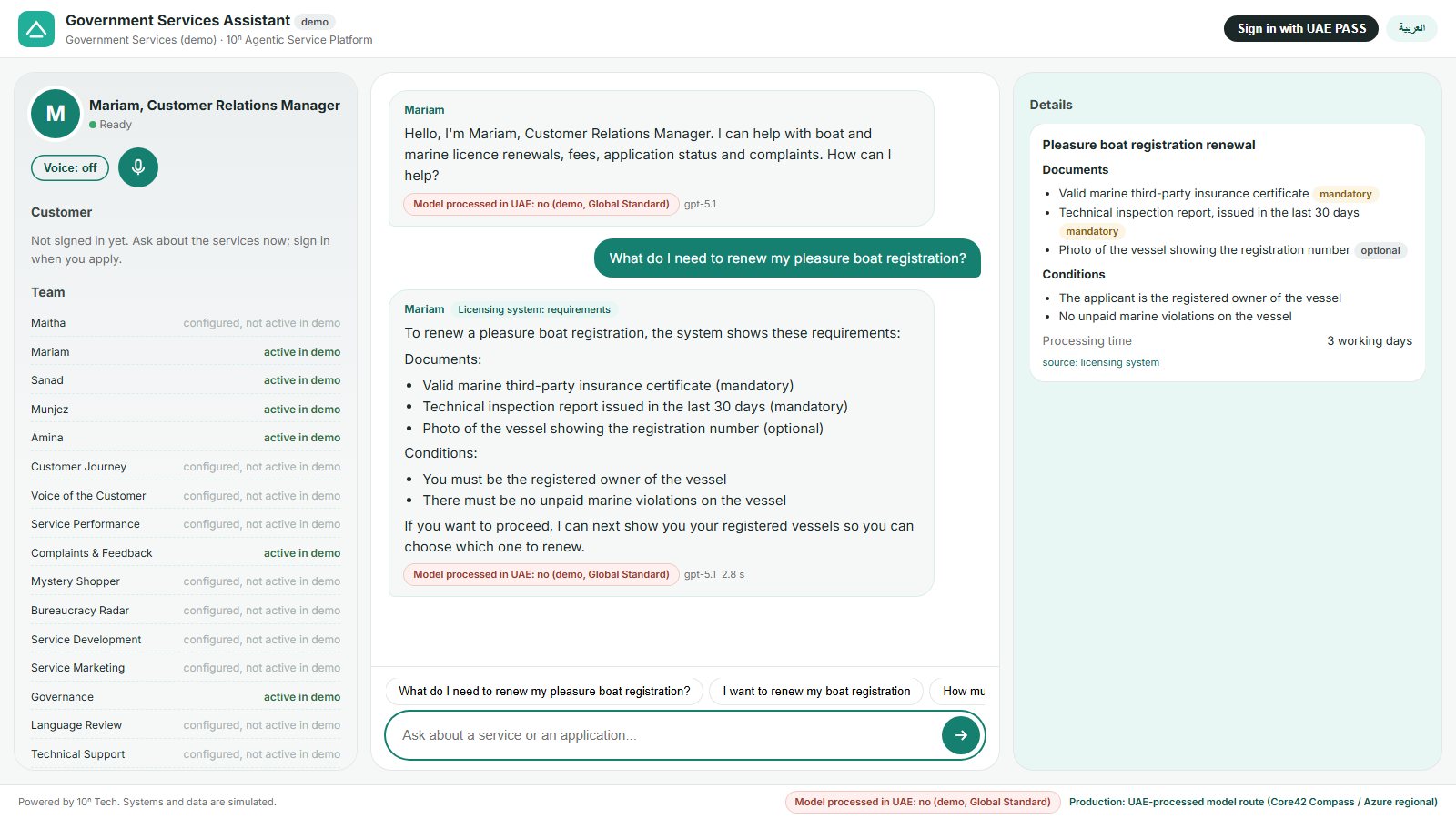
The customer asks in plain words. The front-door agent finds the service and reads its requirements from the licensing system, with mandatory and optional documents marked. The knowledge base holds descriptions only, so a fee or a rule cannot drift from the source.
2. UAE PASS before any personal record
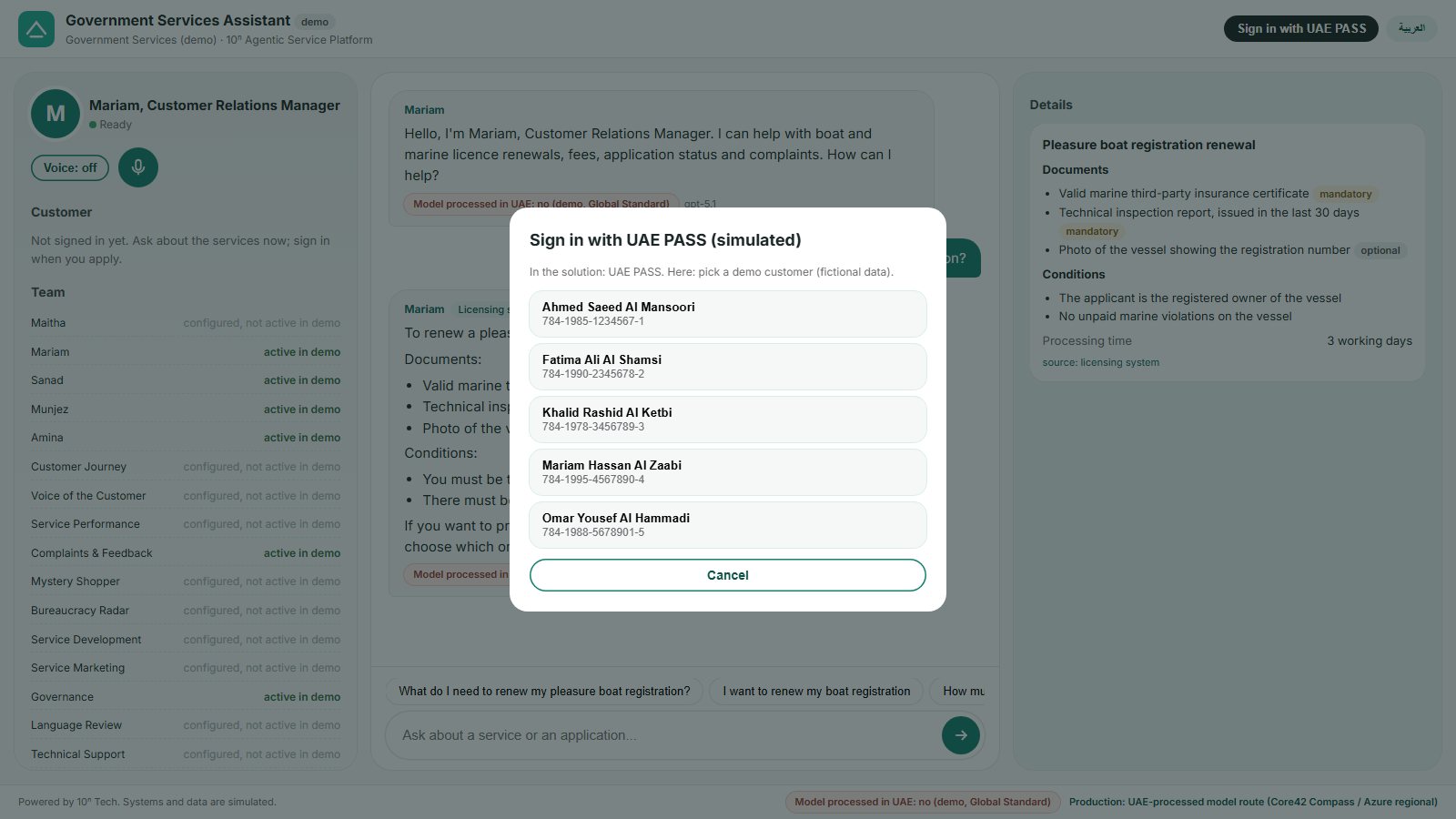
Reading the customer’s own records needs identity. The agent asks for UAE PASS sign-in and then reads only the records the system returns for that Emirates ID. A request for someone else’s record is refused.
3. A prefilled application, confirmed by the customer
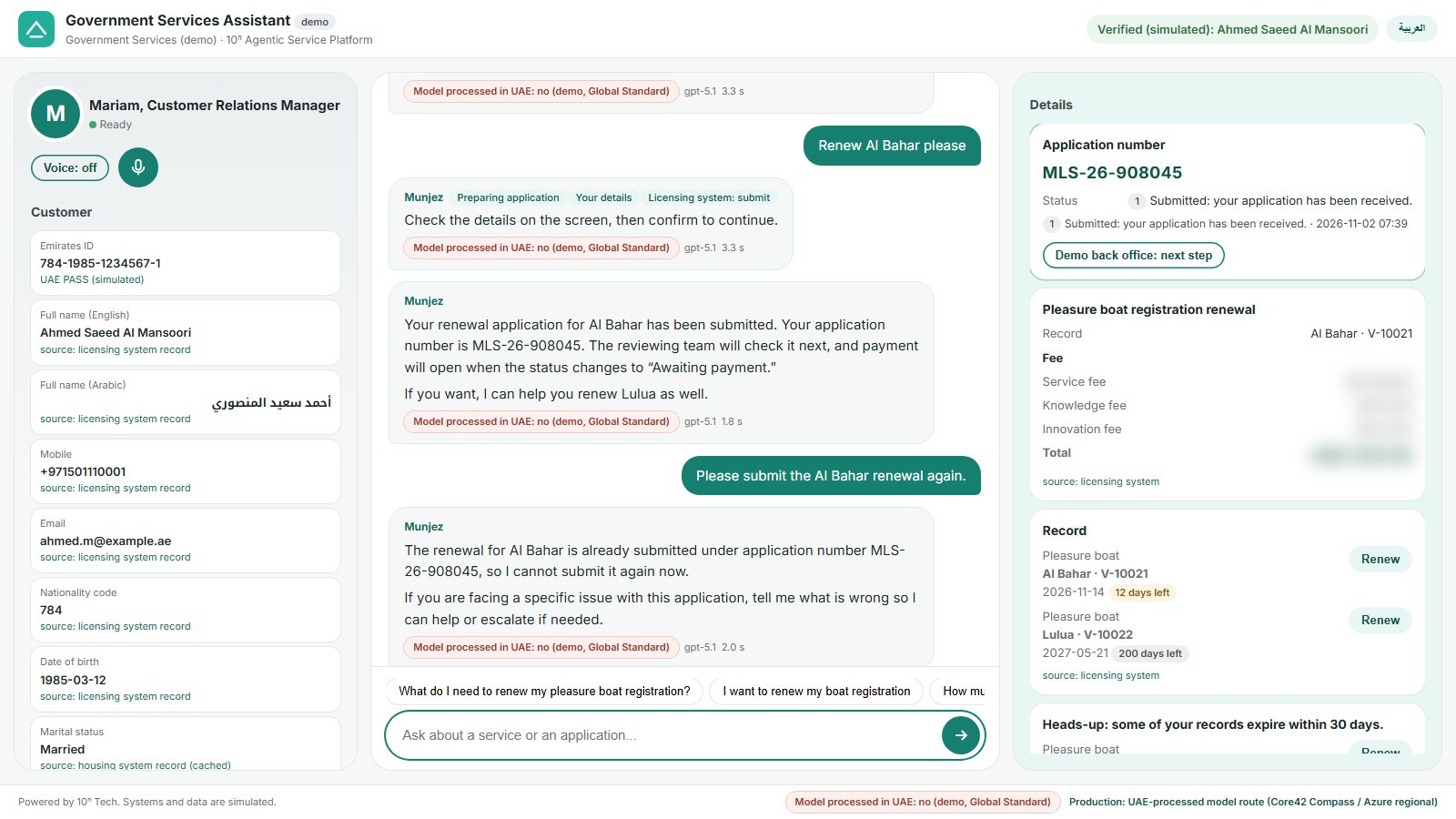
The agent prefills the form from the customer’s record and the entity’s other platforms, and labels each field with its source. Missing fields show as unknown, and the agent asks for them. Nothing is filed until the customer confirms the exact details.
4. Filed once
The filing tool sends the application with one idempotency key per draft. If the system times out, the tool looks the application up before it tries again, so a repeated request returns the same application number. The customer only ever sees the number the system issued.
5. Payment link, status and certificate
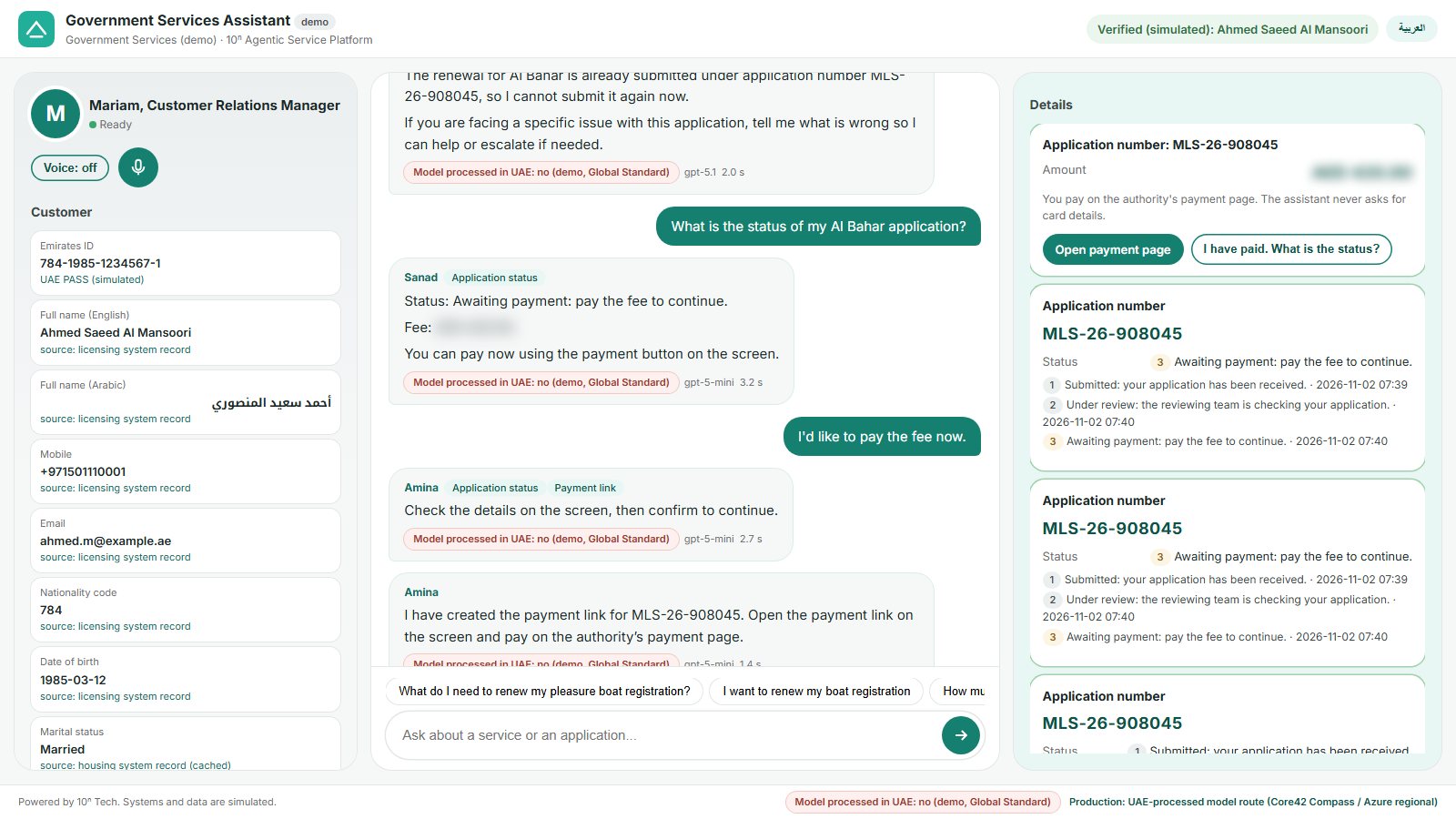
When the application reaches payment, the agent sends a link to the authority’s payment page, and its tools take no card data. The customer can ask for the status at any time, and at sign-in the agent flags records that expire within 30 days. The issued certificate opens in Arabic and English.
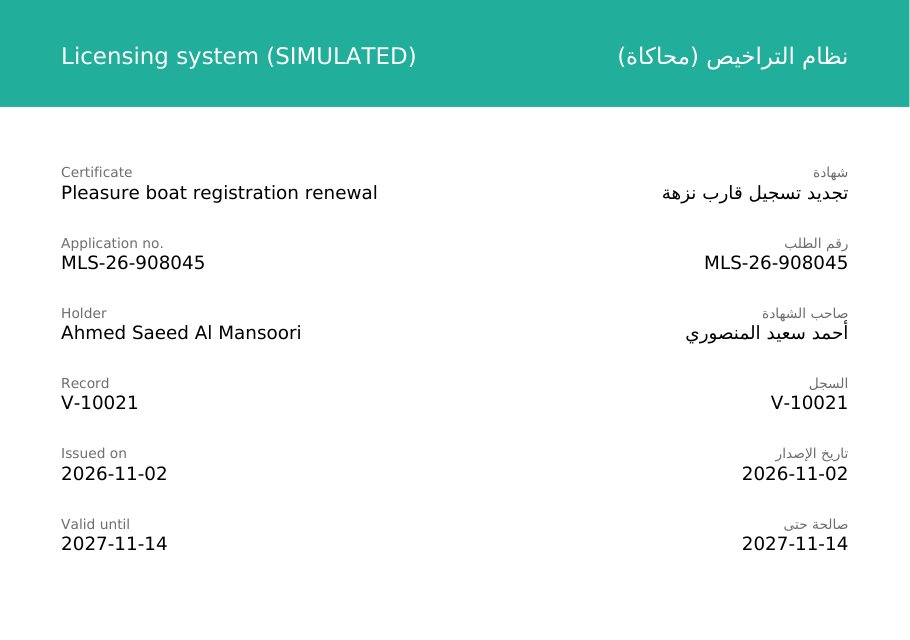
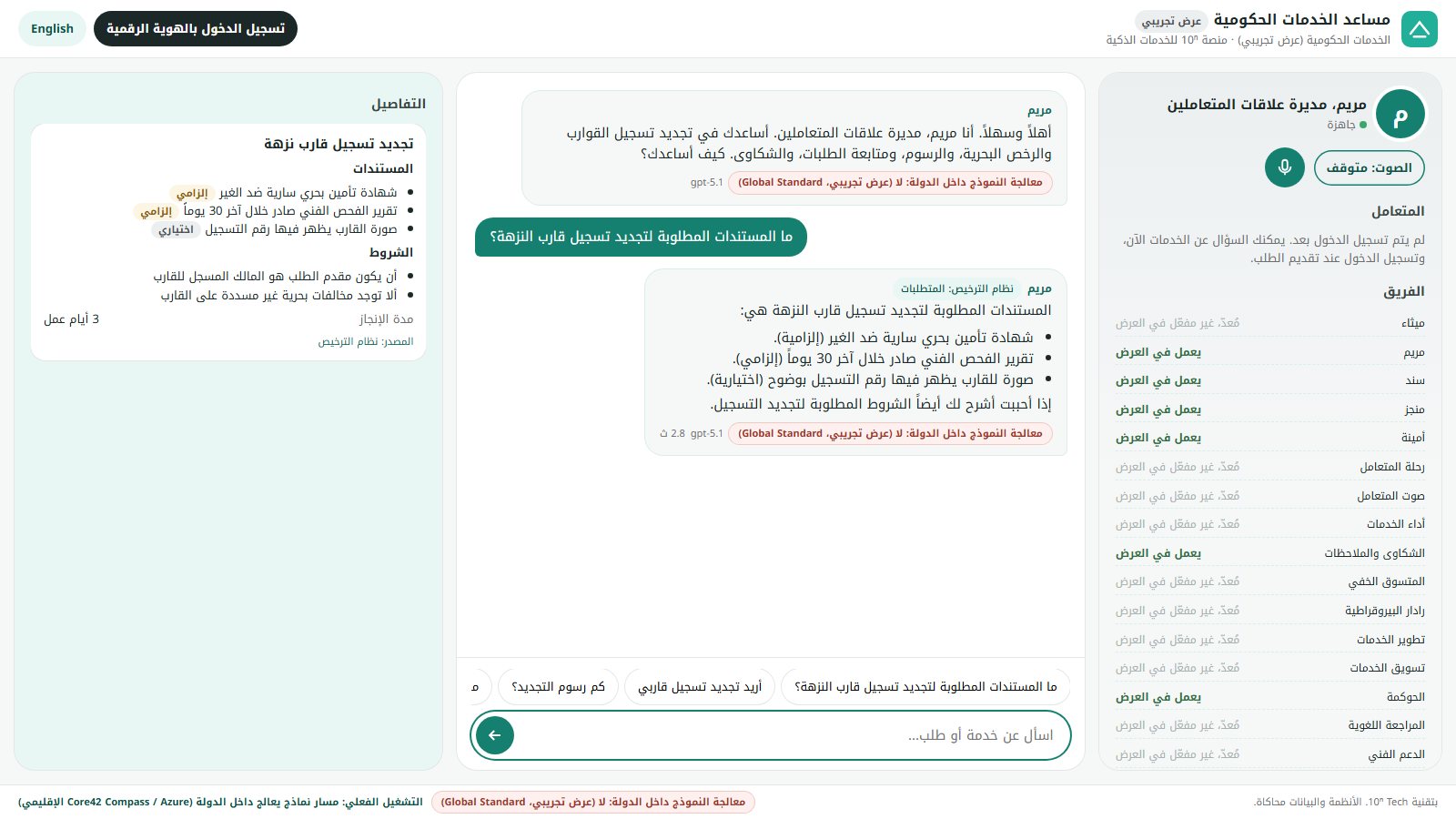
6. Arabic first, in one conversation
The assistant opens in Arabic, right to left. A customer can switch to English mid-conversation and back again; the application and the context stay the same.
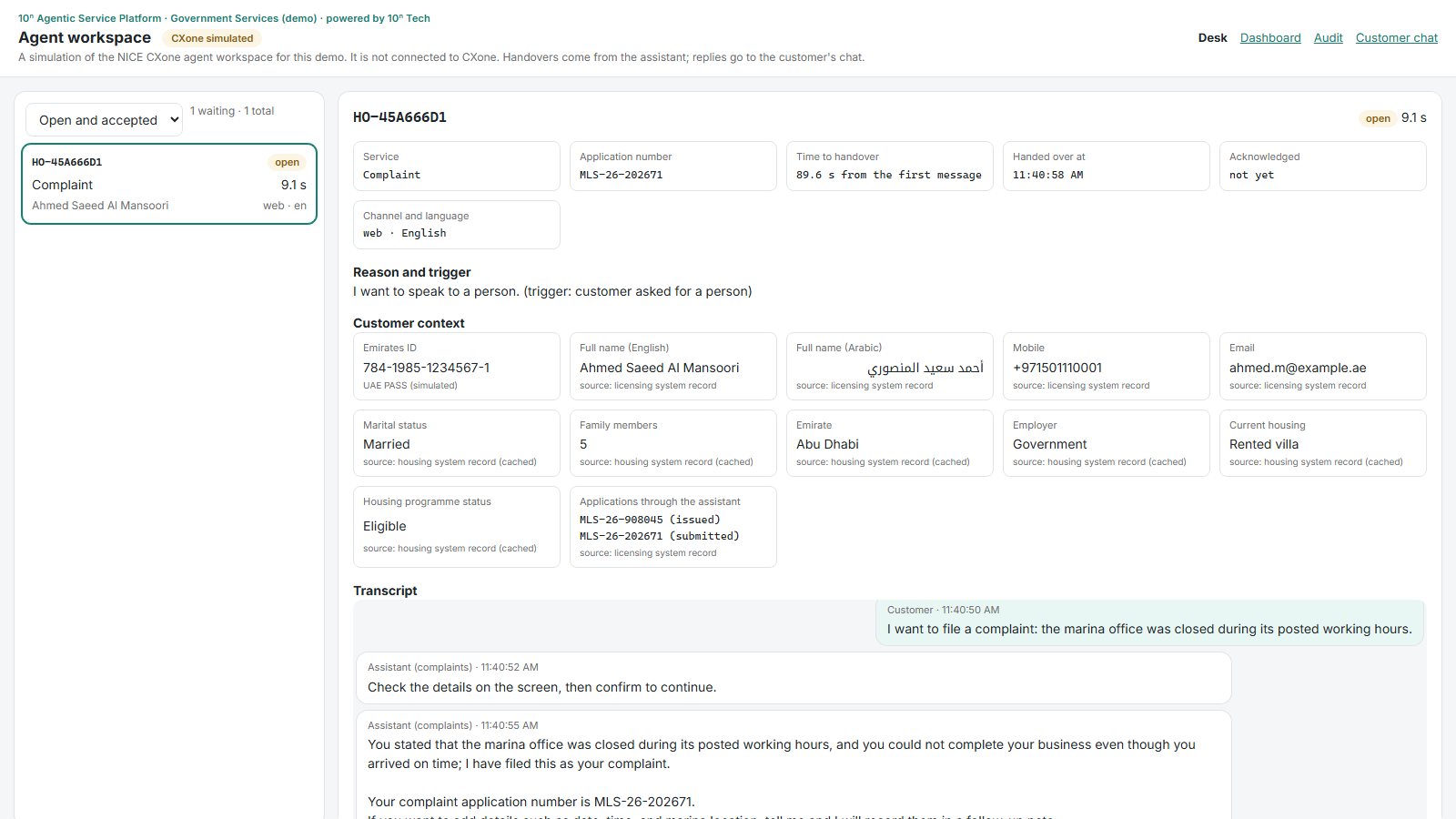
7. A person, one message away
A customer who asks for a person, escalates a complaint or hits the same failure three times goes to the service desk. The officer sees the transcript, identity, service, application and the reason for the handover, accepts the case and replies inside the customer’s chat. The desk records the time to acknowledge against a target.
What the agent does and what stays with the entity
| The agent | The entity’s systems and staff |
|---|---|
| Explains requirements and fees, read from the system | Set the fees and the rules |
| Prefills and files the application | Review and decide |
| Sends the payment link | Take the payment on the government payment channel |
| Reports the status | Issue the certificate |
| Hands the case over with its context | Answer as an officer, then hand back |
Seventeen agent roles in one registry
The demo registry lists 17 agent roles. Six run in the demo (front door, transaction review, payments, status and certificates, complaints, governance), and the others switch on per service. For each service, every role gets a full entry: its purpose, owner, tools, the data it may use, its approval points and what it must never do.
Designed for the UAE agentic government programme
On 23 April 2026 the UAE Cabinet announced a framework to run half of government sectors and operations on agentic AI within two years. The National Committee for Agentic AI followed in August 2026 with an operating framework and a government experience design guide (in Arabic). We design each service against the framework and the guide: UAE PASS identity before personal data, Arabic first with English, cited sources, a human alternative for every service, and a person accountable for each decision.
What the operations team sees
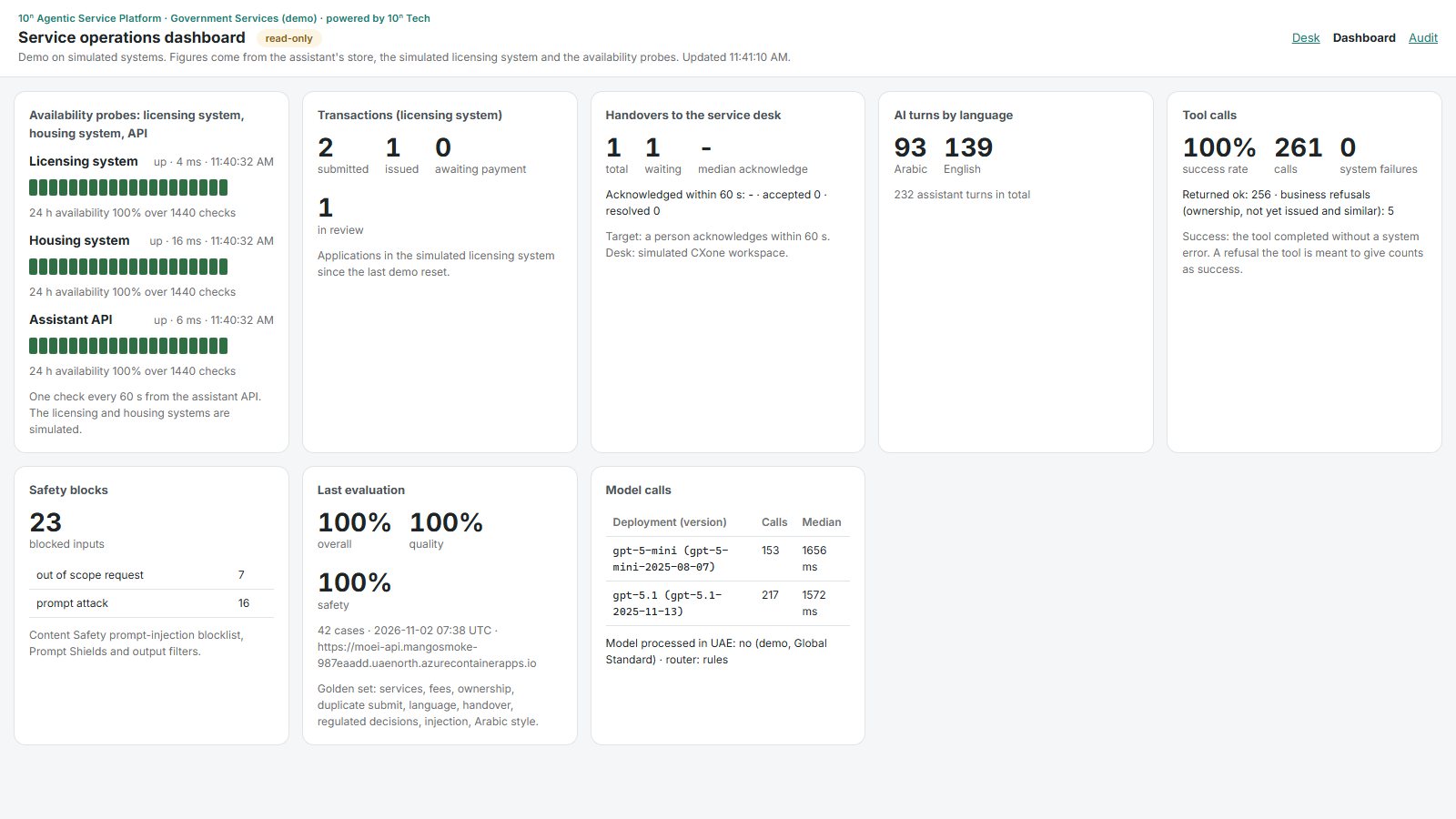
The operations dashboard shows transactions, handovers with the median acknowledgement time, turns by language, safety blocks and the last evaluation run. The audit browser opens any session call by call.
Want to see it on your own service? We run the demo live with you, in Arabic or English.
Related: Agentic AI Platform, web, WhatsApp and voice, governance and audit, AI agents for government in Dubai.
Frequently asked questions
Does the AI agent approve applications?
No. The agent prepares, checks and files. The entity’s systems price and decide, and staff approve. A request to approve one’s own application or to waive a fee is refused before any model call.
Does it work with UAE PASS?
It is built for it. The demo uses a simulated sign-in screen because it connects to no real system; production needs UAE PASS onboarding with the entity, which we plan from the first week.
Which systems does it connect to?
It is designed to connect through the entity’s published interfaces: licensing and case systems, records platforms, the payment channel, the service bus and the contact centre. The agents write only through tools. The demo connects to simulated licensing and housing systems.
Do 100 services mean 100 builds?
No. Most government services are the same few transaction types on one record: issue, renew, modify, replace and cancel. Services that share a type share one template, each with its own rules and acceptance tests.
